The Business Case for Carbon Accounting: What It Is and Why It Matters
Key Takeaways
- Carbon accounting is a regulatory and strategic necessity, with policies like the European Union’s Corporate Sustainability Reporting Directive (CSRD) and California’s SB 253 requiring emissions tracking.
- Many companies track emissions inconsistently, underscoring the need for structured, repeatable carbon accounting to ensure accuracy and impact.
- Accurate carbon data drives efficiency and risk management, helping organizations reduce costs, streamline supply chains, and comply with climate regulations.
- Scope 2 emissions are increasingly challenging to quantify, especially for data centers and power-intensive operations. Grid-average emissions factors mask location-specific and time-specific variations that drive real procurement and siting decisions. Precise scope 2 accounting requires understanding which generators actually serve the load, when, and under what grid conditions.
- Scope 3 emissions have historically been a complex challenge, requiring better supplier engagement, standardized reporting, and expert guidance to support accuracy.
Carbon Accounting: More Than Compliance, a Strategic Advantage
Companies increasingly recognize the business value of reporting carbon emissions: it reduces regulatory risks, attracts sustainability-focused investors, enhances market competitiveness, and drives cost savings through efficiency. Transparent emissions reporting strengthens brand trust and aligns companies with global sustainability standards, ultimately turning climate accountability into a strategic advantage.
Yet, many companies struggle with incomplete and inconsistent tracking. According to the State of Corporate Climate Commitment, 80% of corporate professionals surveyed have tracked emissions at least once, but only 52% do so annually. Without a structured process and reliable data, businesses face compliance risks, financial penalties, and missed cost-saving opportunities.
This guide provides a clear roadmap to effective carbon accounting, equipping businesses with the knowledge to navigate regulations, enhance data accuracy, and implement effective strategies for compliance and operational success.
[stat]
What Are the Benefits of Effective Carbon Accounting?
By embedding annual carbon accounting into operations, organizations can enhance sustainability efforts while achieving financial and strategic benefits. Key benefits include:
Enhancing Transparency and Accountability
By providing accurate and verifiable emissions data, companies can showcase corporate responsibility and build a foundation of transparency. Aligning with recognized standards like the GHG Protocol strengthens confidence among investors and regulators. As climate disclosure laws tighten globally, ensuring credible emissions reporting reduces regulatory risks and enhances stakeholder trust. This commitment to authenticity minimizes the risk of greenwashing and strengthens brand reputation.
Guiding Regulatory Compliance and Risk Mitigation
Businesses navigating evolving environmental regulations must proactively align with policies to avoid financial and legal risks. Mandated emissions reporting, under policies like the European Union’s Corporate Sustainability Reporting Directive (CSRD) and Carbon Border Adjustment Mechanism (CBAM) as well as California’s SB 253, ensures compliance and enhances corporate accountability. Staying ahead of these evolving requirements prepares businesses for future policy shifts and safeguards their long-term resilience.
Improving Operational Efficiency and Reducing Costs
By analyzing energy consumption patterns, organizations can identify operational inefficiencies, optimize supply chains, and implement cost-saving measures while reducing carbon emissions. For example, evo, an outdoor experiences company, collaborated with Relae (formerly Carbon Direct) to assess its carbon footprint. This analysis revealed opportunities to reduce emissions across facilities, products, and shipping. By promoting sustainable practices throughout their supply chain, evo enhanced both environmental performance and operational efficiency.
Building a Competitive Advantage in a Low-Carbon Economy
Building a competitive advantage in a low-carbon economy requires prioritizing emissions transparency and sustainability. Companies that integrate emissions transparency into their operations build stronger relationships with supply chain partners and meet consumer demand for responsible brands. Aligning corporate values with sustainability fosters long-term customer loyalty and enhances market positioning.
Driving Strategic Planning and Net-Zero Alignment
Setting and tracking net-zero commitments requires structured, data-driven carbon reduction roadmaps. Businesses that measure emissions annually are more likely to set public sustainability goals and take action. Carbon accounting supports clean energy transitions, fosters supply chain collaboration, and integrates carbon removal strategies to address residual emissions. By embedding emissions measurement into long-term planning, organizations facilitate resilience and profitability in an evolving business landscape.
Carbon emissions measurement correlates to climate action: 61% of companies that calculate their footprint annually have both set a public goal and begun working toward it.
What Is Carbon Accounting? The Basics You Need to Know
Carbon accounting is the systematic measurement, analysis, and reporting of an organization's greenhouse gas (GHG) emissions. Using standardized metrics like carbon dioxide equivalent (CO₂e), companies can assess emissions across operations and supply chains, identify high-impact areas, and set and track progress toward emissions reduction targets. When conducted annually, carbon accounting supports regulatory compliance, risk management, and decarbonization strategies essential for long-term sustainability.
The GHG Protocol is the most widely used framework for carbon accounting, setting the baseline for how organizations measure and report their emissions. It classifies emissions into three scopes:
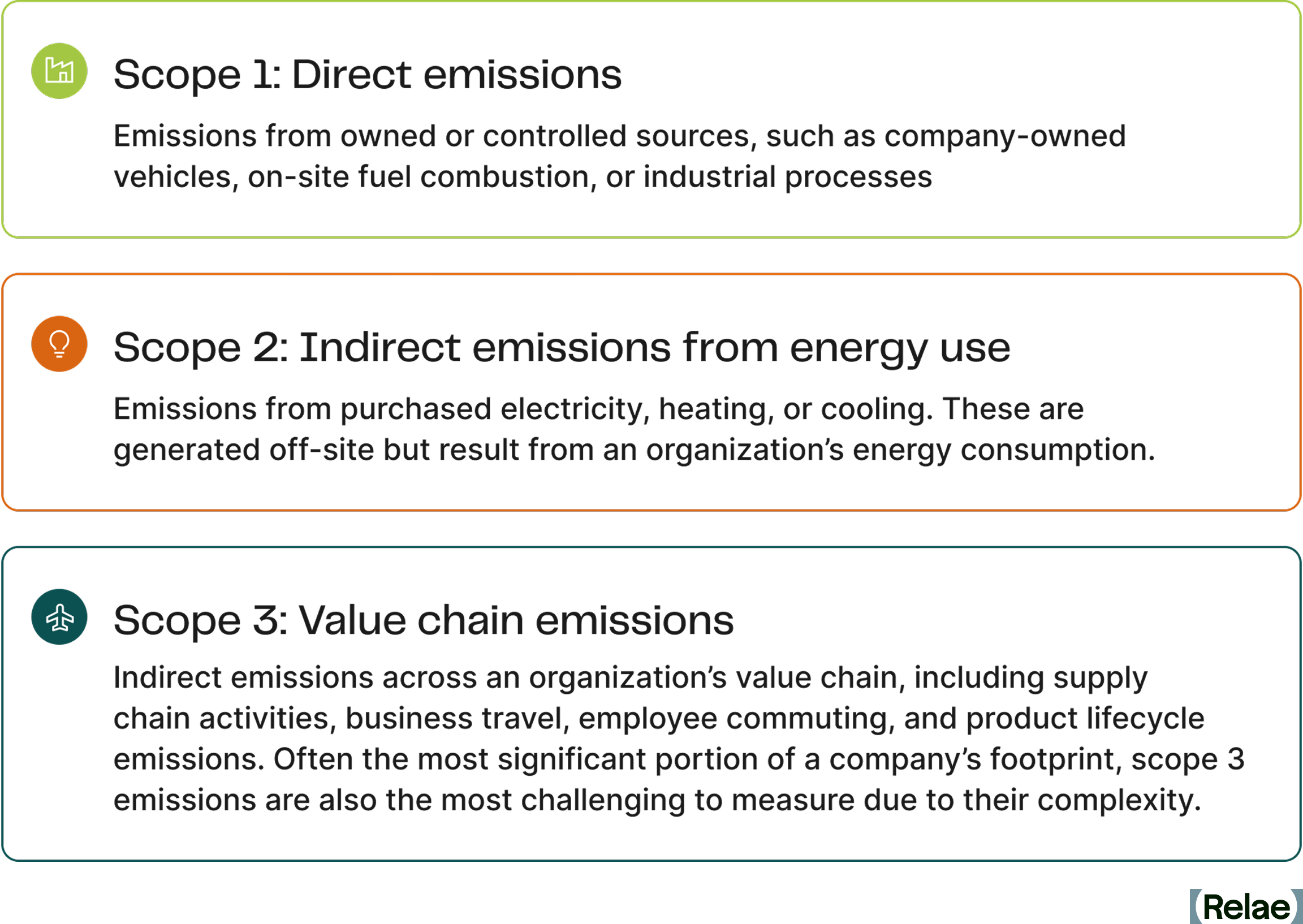
Keep in mind that scope 2 emissions are increasingly difficult to quantify using traditional methods, which fail to account for real-time grid fluctuations and locational energy variations. Cutting-edge, advanced carbon accounting methodologies now provide more precise tracking, particularly benefiting large power consumers like enterprise data centers and hyperscalers.
Scope 3 emissions also continue to pose a great challenge, requiring extensive data collection and supplier coordination, complexities that are difficult to navigate without expert guidance.
The Corporate Carbon Accounting Process: A Step-by-Step Guide
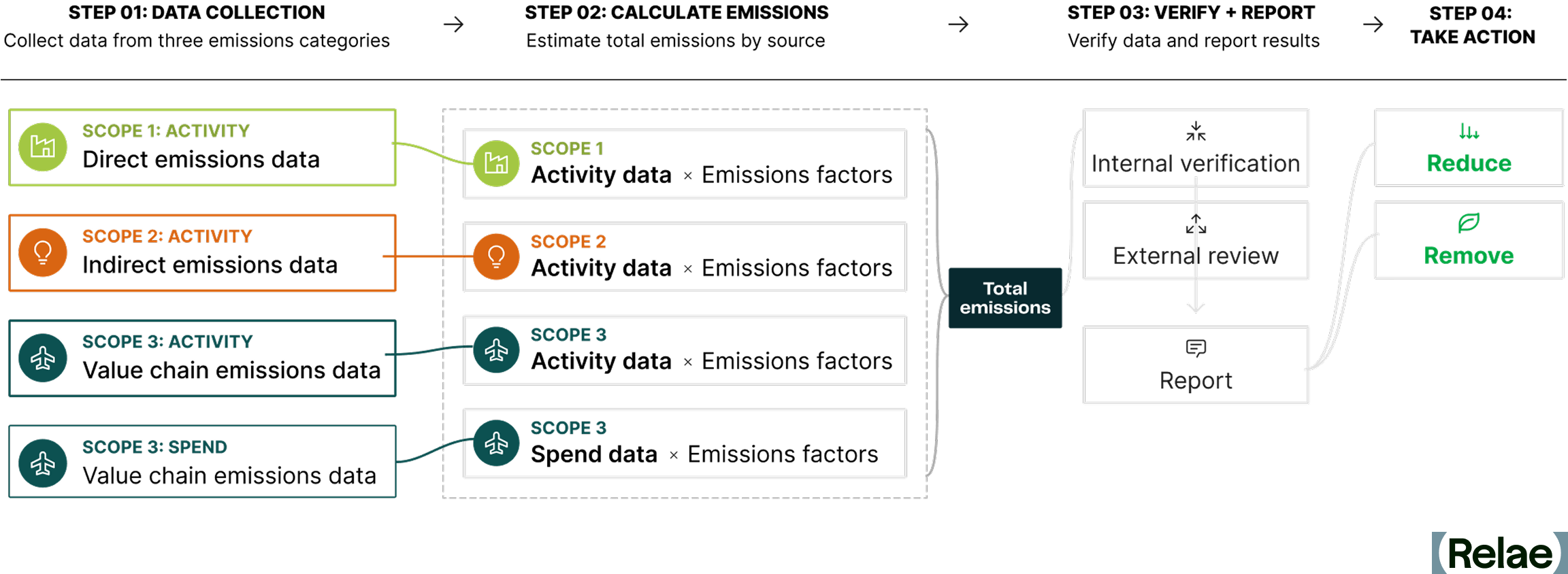
The carbon accounting process involves systematically measuring, analyzing, and managing an organization’s greenhouse gas emissions across its operations, supply chain, or product life cycle.
- Collect emissions data across all three scopes (scope 1, scope 2, and scope 3).
- Categorize and quantify emissions from each source to estimate the total impact.
- Verify data and report findings to promote compliance, accuracy, and transparency.
- Develop and implement reduction strategies based on insights from the data.
Activity Data Versus Spend Data
Carbon measurement primarily relies on two data types: activity data and spend data.
- Activity data includes direct measurements reflecting the physical amount of an emitting source, such as fuel consumption (in liters or gallons) or travel distance (in kilometers or miles). It accurately represents emissions from a particular operational emission source and allows for measurable decarbonization strategies.
- Spend data serves as an alternative when activity data is unavailable. It estimates emissions based on financial expenditures related to goods, services, or travel. While less precise, it is useful for approximating scope 3 emissions, where direct measurement is often challenging.
Tips for Accurate Data Collection
Effective carbon accounting relies on seamless collaboration across departments, suppliers, and external data sources. Key strategies include:
- Stakeholder engagement: Finance, operations, procurement, and sustainability teams must coordinate to track and validate emissions data. Engaging suppliers is essential for capturing and reducing scope 3 emissions.
- Addressing data gaps: When data is unavailable, proxy data can be used to estimate emissions, but it should be a temporary solution while organizations work toward obtaining accurate, real-world data.
- Standardization and verification: Implementing consistent methodologies and third-party audits enhances the credibility of carbon reporting, building stakeholder trust.
By leveraging precise data, understanding emission scopes, and adopting structured data collection methods, organizations can create a transparent, science-based approach to carbon accounting and lay the foundation for meaningful climate action.
Climate Standards Businesses Need to Know
Global standards and regulations define carbon accounting methodologies by establishing guidelines for how organizations set boundaries, measure, and disclose emissions. Several key frameworks and policies guide both the international and regulatory levels.
Guidance frameworks
GHG Protocol: The Foundation of Carbon Accounting
- The GHG Protocol is the most widely adopted framework for measuring and managing emissions across organizations globally.
- Developed by the World Resources Institute (WRI) and the World Business Council for Sustainable Development (WBCSD), it provides common standards for businesses, governments, and supply chains.
- Sector-specific guidance has been developed for industries such as energy, finance, manufacturing, and agriculture, which face stricter reporting requirements than service-based sectors.
- The GHG Protocol is currently undergoing its first major revision since its launch. Partnering with the International Organization for Standardization (ISO) to co-develop a consolidated corporate standard that merges the Corporate Standard, Scope 2 Guidance, Scope 3 Standard, and Actions and Market Instruments standard with ISO 14064-1. As of mid-2026, the effort is in active technical development, with a draft opening for public consultation targeted for mid-2027 and a final published standard expected by the end of 2028. Current standards stay in effect until that replacement is finalized, so nothing changes for reporting yet.
ISO 14064: Standardized Emissions Quantification and Reporting
- The ISO 14064 series, created by the International Organization for Standardization (ISO), offers detailed methodologies for greenhouse gas accounting.
- It includes guidelines for organization-level emissions quantification, reporting, and reduction projects.
- ISO 14064 serves as the foundation for independent verification and compliance with voluntary carbon markets, enhancing the credibility of emissions reduction projects.
Policies
EU CSRD: Expanding Mandatory Climate Disclosure
- The Corporate Sustainability Reporting Directive (CSRD) enforces detailed sustainability reporting requirements for companies operating in the EU.
- Following the EU's 2025 to 2026 Omnibus simplification package, CSRD's scope narrowed sharply. It now applies to roughly 5,000 large companies, with new thresholds of more than 1,000 employees and more than 450 million euros in net turnover (up from the original 250 employees and 50 million euros)
- In scope companies must still report scope 1, 2, and 3 emissions data aligned with the EU Taxonomy and European Sustainability Reporting Standards (ESRS).
California SB 253: State-Level Mandatory Emissions Disclosures
- California’s SB 253 Climate Corporate Data Accountability Act sets strict emissions reporting mandates within the US.
- It applies to companies with over US$1 billion in revenue doing business in California, requiring scope 1 and 2 emissions reporting by November 2026..
- CARB has said scope 3 reporting and third-party assurance requirements will be addressed in a subsequent rulemaking covering 2027 and beyond.
EU CBAM: Preventing Carbon Leakage and Promoting Decarbonization
- The Carbon Border Adjustment Mechanism Requirements (CBAM) requires importers of specific carbon-intensive goods to disclose embedded emissions to prevent carbon leakage and promote global decarbonization by ensuring that domestic and foreign producers face comparable carbon costs.
- During the transitional phase (2023–2025), importers were required to submit quarterly reports on embedded emissions.
- As of 2026, they must purchase CBAM certificates to compensate for the carbon footprint of imported goods.
Although carbon accounting requirements vary across regions and industries, they are all fundamentally rooted in the principles established by the GHG Protocol and ISO 14064. As global regulations like the EU CSRD and state-level legislation evolve, organizations must proactively align with these stricter standards to mitigate regulatory risks and support compliance with emerging sustainability expectations.
What Are the Industry-Specific Challenges of Carbon Accounting?
Carbon accounting presents unique challenges across industries due to varying operational structures, emissions sources, and reporting requirements. While the challenges outlined below focus on financial services, data centers, and philanthropies, similar complexities exist across manufacturing, transportation, healthcare, and other sectors. Tailored strategies are essential to effectively addressing these complexities.
Data Centers: Measuring and Reducing Scope 2 and 3 Emissions
Data center operators consume vast amounts of electricity making scope 2 emissions a major concern. In addition, data center developers and owners face significant scope 3 emissions from embodied carbon from the building materials and the IT hardware required to develop these assets. Effective strategies to reduce data center emissions include:
- Optimizing computing needs and power usage: Use real-time metering and AI-powered analytics to optimize electricity usage across time and locations.
- Procuring low-carbon electricity: Secure long-term access to compliant low-carbon electricity through power purchase agreements (PPAs) or high-impact renewable energy credits (RECs).
- Tracking life cycle emissions: To provide a comprehensive emissions assessment, account for embodied carbon in server manufacturing and end-of-life disposal.
Financial Services: Assessing Emissions From Investments and Portfolios
Financial institutions face significant challenges in evaluating scope 3 financed emissions from investments, loans, and asset portfolios. Key strategies to address these challenges include:
- Adopting industry standards: Frameworks like the Partnership for Carbon Accounting Financials (PCAF) can be used to standardize emissions calculations.
- Understanding asset level data: To accurately report on financed emissions, investors need visibility of emissions data, ideally at the company level.
- Prioritizing green investment strategies: Shift toward sustainable finance by integrating sustainability criteria and emphasizing green bonds or low-carbon funds or investments.
- Ensuring regulatory compliance: To enhance transparency, align with global disclosure frameworks like the International Sustainability Standards Board's (ISSB) IFRS S2 climate-related disclosure standard.
Philanthropies: Managing Emissions From Private Financing
Philanthropic organizations face challenges in tracking emissions across diverse funding activities, operational footprints, and investment portfolios. Effective strategies include:
- Assessing grantmaking impact: Many philanthropies support climate initiatives but may not track the carbon impact of grantees or funded projects. Establishing emissions metrics for grants can enhance transparency and effectiveness.
- Measuring operational emissions: While some philanthropies have relatively low direct emissions, travel, events, and office space still contribute to their carbon footprint. Implementing sustainable operations policies can help reduce emissions.
- Decarbonizing investment portfolios: Endowments and investment funds often hold assets with varying GHG emissions. Aligning investments with sustainability goals and engaging with asset managers on emissions reduction can drive impact.
Organizations across these sectors can enhance emissions transparency, improve sustainability efforts, and align with global climate goals by implementing industry-specific carbon accounting methods.
Navigating Evolving Standards and Scope 2 Complexity
Carbon accounting standards are actively evolving. In October 2025, the GHG Protocol released two proposals for scope 2 accounting revisions, with final standards expected by 2027. The proposals shift toward hourly and regional renewable energy matching, moving away from today's annual, region-agnostic approach. They also introduce consequential methodology that calculates actual emissions displaced by renewable projects, which varies significantly by region.
For organizations with 2030 climate targets, timing matters. Existing long-term contracts are expected to be grandfathered in under new rules. Meanwhile, new renewable projects face interconnection delays of 3 to 5 years, and the US power grid is experiencing sustained demand growth driven largely by data centers. These pressures converge: power demand is rising while new clean electricity supply is constrained.
Navigating these changes requires understanding emerging methodologies and their strategic implications. See our companion pieces on Navigating Scope 2 Accounting Changes and Scope 2 Emissions Explained for detailed context.
Frequently Asked Questions
How long does carbon accounting implementation take?
Initial measurement typically takes 3 to 6 months, depending on data availability and organizational coordination. Starting with data you already have (utility bills, fuel records) accelerates the process. Scope 2 and scope 3 require more extensive work than scope 1, so actual timelines vary based on which scopes are your focus.
What are the biggest obstacles to getting accurate emissions data?
Data siloes across departments (finance, operations, procurement track separately). For scope 2, grid-average factors mask location- and time-specific variations that actually drive emissions. For scope 3, extensive data collection and supplier coordination are required. Seamless collaboration across departments is essential.
Do we need to measure all three scopes to start?
Yes. Organizations should measure all three scopes. Start where your business is most materially affected, but eventually measure all three for compliance and complete visibility into your emissions sources.
GHG Accounting
Relae helps companies, investors, and project developers quantify and interpret emissions across operations, value chains, products, projects, and portfolios. We combine advanced emissions analytics, life cycle assessment, and sector-specific expertise to help you identify emissions hotspots, evaluate high-impact opportunities, and build credible baselines for reporting and investment decisions.
The Value Creation Playbook: From Climate Reporting to Strategic Opportunity



Shelby Walsh

Shelby Walsh

Shelby has focused her career on helping companies assess and reduce their emissions. She has worked across sectors, leveraging her expertise to help organizations focus where impact can be most effective. Her strategic abilities inspire confidence in her clients, as she helps businesses accurately calculate their carbon footprints, identify emission reduction opportunities, and implement effective strategies to achieve sustainability goals.
Working closely with clients, Shelby tailors her approach to meet each organization's unique needs. She employs cutting-edge tools and industry best practices to ensure precise and reliable carbon assessments. Shelby's comprehensive knowledge, from data collection and analysis to reporting and verification, fosters confidence in her ability to guide companies through the complexities of carbon accounting with clarity and precision.
Before joining Relae, Shelby was the head of GHG Accounting at VitalMetrics before being acquired by Watershed. She worked with customers to track their emissions throughout their supply chain, create science-based targets, and develop decarbonization plans to meet those targets. At Watershed, she scaled her impacts by leveraging software to streamline data collection for businesses of all sizes. From her previous work, Shelby brings a holistic perspective on leveraging software for scalable impact, with the personal touch of the individualized needs of every business.
What to Read Next
Navigating Scope 2 Accounting Changes
Key Takeaways
- Voice your opinion: The Greenhouse Gas (GHG) Protocol is updating its scope 2 guidance with final standards expected in 2027, which may require hourly and regional matching of renewable energy certificates (RECs), potentially changing how companies claim their electricity-related emission reductions.
- Act now to secure renewable energy contracts: Companies should move forward with their scope 2 climate commitments today. The GHG Protocol is expected to grandfather in contracts entered into under existing rules.
- Beyond the megawatt hour (MWh): High-impact forward REC contracts measure impact beyond the current annual MWh match requirement, maximizing near-term carbon abatement and social impact for every dollar invested.
Why 2027 Rule Changes Matter for 2030 Targets
Companies racing to meet 2030 climate targets face converging pressures: surging electricity demand, constrained renewable energy supply, and scope 2 accounting rules that could undergo significant changes by 2027.
In a recent webinar, power market experts from Relae (formerly Carbon Direct) and Ever.green explored these changes. Patti Smith, former Electricity Decarbonization Lead at Relae; Julia Millot, Senior Power Decarbonization Manager at Relae; and Liz Pearce, Chief Revenue Officer at Ever.green, unpacked what's changing and how companies can respond.
The stakes are high. Based on GHG Protocol Scope 2 Public Consultation materials, companies may need to match RECs to electricity consumption on an hourly and locational basis as early as 2028. However, we expect the GHG Protocol to grandfather forward REC contracts signed before new rules take effect, enabling companies to continue advancing toward 2030 targets amid rule uncertainty.
Big Changes to the Power Grid
The US power grid is entering sustained demand growth for the first time in decades. "Over the next five years, data centers alone are going to put [the equivalent] of four New York Cities onto the grid," Smith explains, citing forecasts that project around 200 terawatt hours of new data center load through 2030 (i.e. cumulative energy consumption). That demand growth also shows up in near-term grid planning. NERC's January 2026 Long-Term Reliability Assessment forecasts North American summer peak demand rising by 224 gigawatts—a 24% increase—over the next decade, with new data centers cited as the primary driver. These figures highlight that peak capacity and total energy consumption are directly impacted by the data center boom.
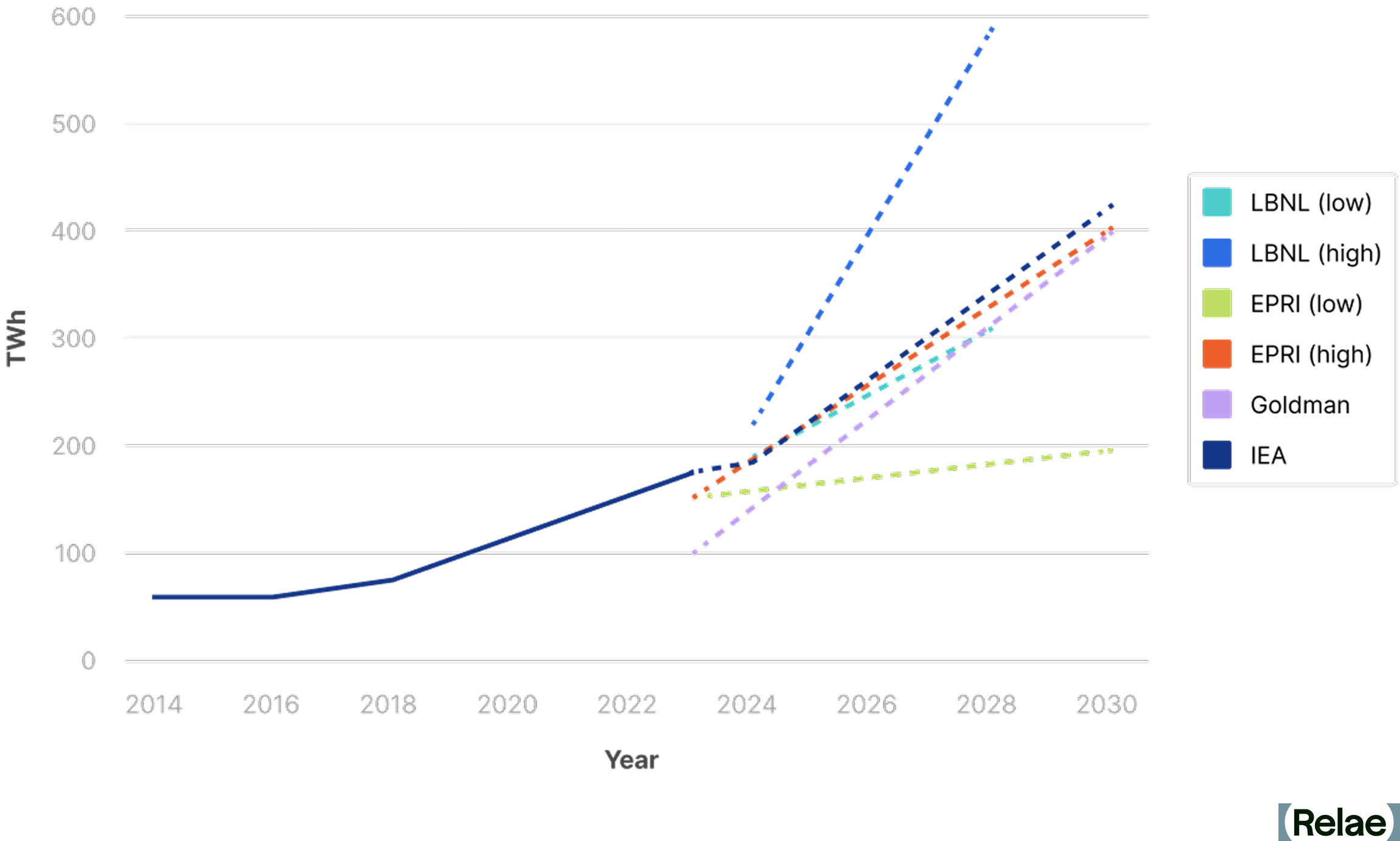
Meanwhile, new renewable projects face headwinds. Smith points to interconnection queue delays: "Solar and battery projects are taking three to five years from initial request to operation." At the same time, clean energy tax credits, which were driving wind and solar expansion, have been curtailed. New restrictions on foreign supply chain materials, which are critical to renewable project development, are further hampering the development of new clean electricity projects.
The result: Power demand is rising while new renewable electricity supply is getting throttled.
The Messy Reality of Electricity Emissions Accounting
Quantifying the emissions from an individual power plant is straightforward. Allocating those emissions to the companies that consume power is far more complicated.
Grid-supplied electricity comes from many generators that shift constantly, sometimes even second to second. Companies can’t directly measure emissions from a grid-connected load because the generators serving it continuously change.
Without direct measurement, companies need rules to estimate the emissions they are responsible for. The GHG Protocol’s Scope 2 Guidance provides that framework, establishing how companies estimate electricity-related emissions and how to reduce them through renewable energy purchases.
How Companies Currently Claim Renewable Energy
For the past decade, companies have used renewable energy purchases to achieve their scope 2 emission reduction goals. The most widely used mechanism is the REC, each representing clean energy attributes for one MWh of renewable electricity generated and added to the grid. Currently, when a company buys RECs equal to its annual electricity consumption, it can claim 100% renewable electricity. Under current rules, companies can use purchased renewable energy from anywhere in North America and apply it to any load in North America at any time during the year.
Importantly, emissions from different power grids vary widely across North America depending on time of day, time of year, and the power grid makeup.
This flexibility allows companies to match a REC from a clean grid against electricity consumption from a dirtier one, creating a potential mismatch between emissions claimed and actual emissions avoided. This gap has drawn scrutiny, contributing to the motivations for the scope 2 rules rewrite.
What's Changing in GHG Protocol Scope 2 Accounting?
On October 19, 2025, after years of consultation, the GHG Protocol released two separate proposals for public consultation:
1. Scope 2 changes: Moving away from annual REC matching to an ‘hourly and regional’ REC matching requirement.
2. New consequential methodology: A new approach to estimating emissions caused by a company’s consumption and avoided by its renewable energy contracts.
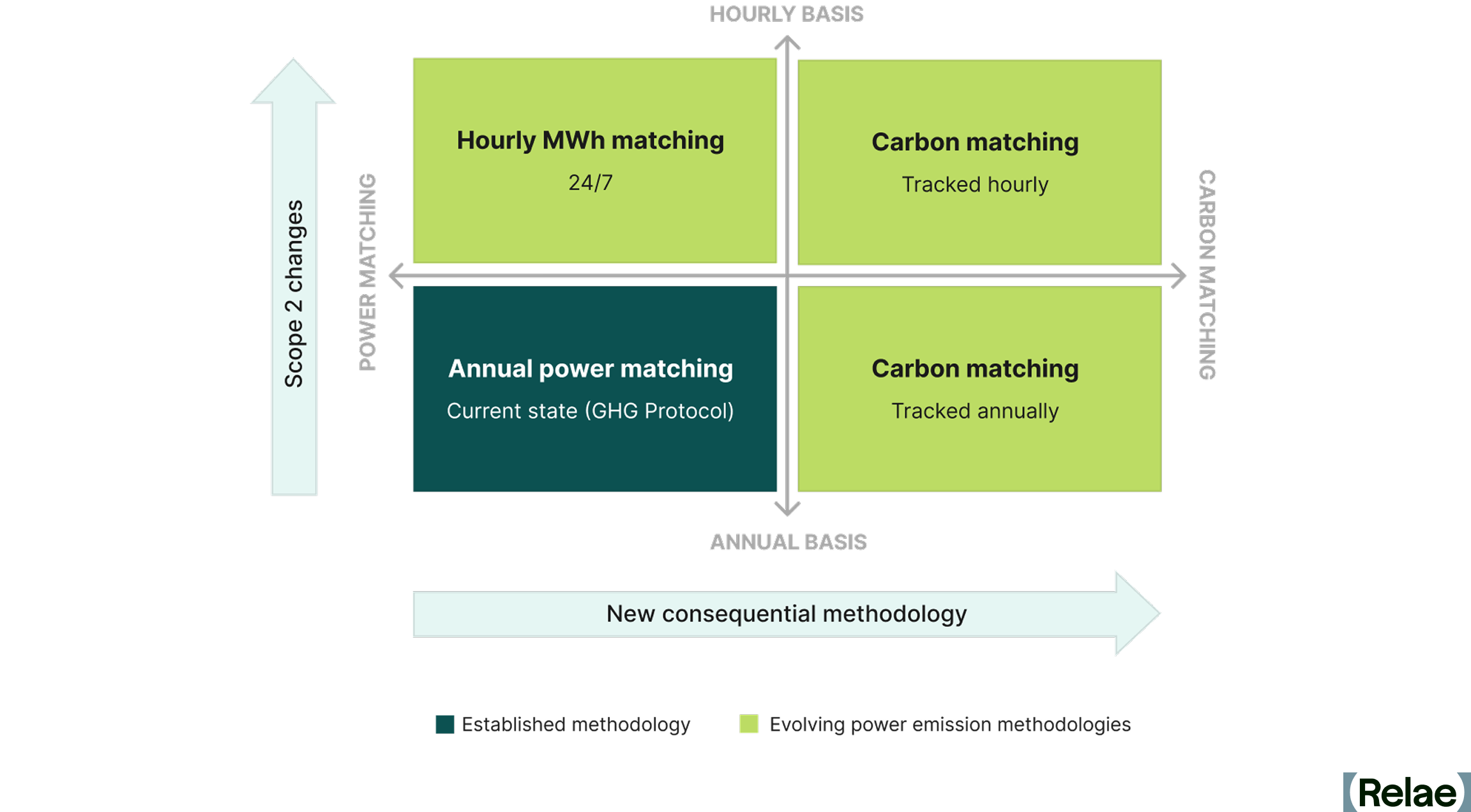
The hourly matching proposal (24/7): Companies would match RECs to consumption hour by hour within the same grid region, rather than annually across any North American grid.
"A REC generated on a Texas wind farm would not be able to be used for electricity consumed in New York," Millot explains.
The consequential approach: This proposes a carbon matching methodology, which estimates emissions caused by a load and estimates the emissions a renewable project displaces.
"Projects in the Carolinas are avoiding 0.6 or 0.7 tons of CO2 per megawatt hour, whereas a California project is probably closer to 0.2 or 0.3," Smith explains.
Projects in the Carolinas deliver more than double the climate impact per REC under the consequential rules. In this methodology, the load and generator do not need to be located in the same region.
While the proposed rules and new methodologies work through the public consultation process, it will be important for companies to start to anticipate the potential impacts on their climate goals and strategies.
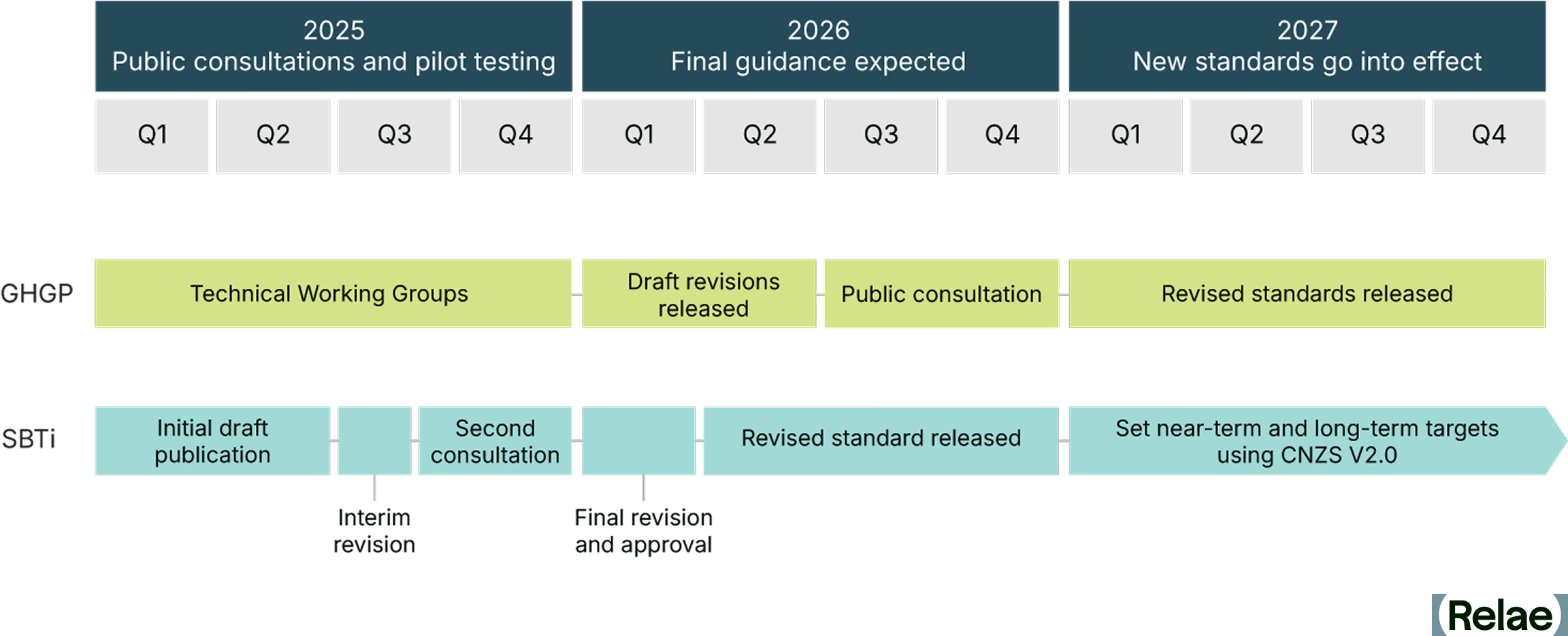
Timeline for Scope 2 Accounting Changes
Both the Scope 2 and Consequential Electricity-Sector Emissions consultations closed January 31, 2026, after GHG Protocol extended the original deadline. The GHG Protocol is analyzing feedback with a second consultation and final standards expected by 2027, though the exact timeline is still being finalized.
Companies are encouraged to participate in the public consultation. The GHG Protocol is asking for comments on critical questions, such as:
- Should proposed rules apply to energy consumers of all sizes?
- Which geographical boundaries should be used for locational matching?
- Should existing contracts be grandfathered in?
The public consultation period is an opportunity to shape the standards that will govern electricity-related emission accounting for years to come.
Why Act Now Instead of Waiting
With final rules still in development, companies with scope 2 emission reduction goals or science-based targets face a decision: Wait for clarity or act now.
Several factors favor early action:
- Inclusion of legacy contracts. "There are a lot of indications from the committees that existing long-term contracts will be grandfathered in," Pearce notes. The draft considers a legacy clause that would allow organizations to apply pre-existing contractual agreements, even if they don’t comply with new rules.
- Throttled renewable project development. Interconnection delays for new renewable energy projects, elimination of clean energy tax credits by 2028, and limitations on foreign materials needed to develop renewable energy project components mean that new REC supply may be harder to access in future years.
- Renewable project development timelines. "There's generally a lag, sometimes six to 18 months" between contract signing and project operation, Pearce explains. That means even if you sign today, the RECs won’t be generated for up to 18 months from the signing date.
- High-impact opportunity. Through careful project selection, renewable energy investment can go beyond the annual energy match requirement and incorporate additional impactful metrics, such as higher avoided emissions and positive social impacts.
Renewable Energy Buying Options for Companies
Previously, companies have been able to buy renewable energy through the following three paths; however, they all come with their own tradeoffs.
Traditional REC Buying Options
- REC spot markets make up most corporate renewable procurement. However, they mainly come from existing projects rather than financing new development, which is critical to expanding renewable energy supply to meet rising decarbonization needs.
- Virtual power purchase agreements (VPPAs) are highly impactful but require large power loads and the ability to manage long-term financial risks. Unavailable to most companies.
- Utility green tariffs have limited availability throughout the US (depending on the utility(s) that serve your load) and vary in quality.
Alternative REC Procurement Approach
For companies that want to go beyond the REC spot market and are not large enough to pursue a VPPA, there’s an alternative procurement option available: a high-impact forward REC contract. These multi-year contracts commit to purchasing RECs from specific new projects before they're built, providing the upfront revenue certainty developers need to secure financing at a fraction of the scale and complexity of a VPPA.
Comparing Renewable Energy Procurement Options
The Path Forward
Despite rapidly increasing grid demand, renewable project headwinds, and changing accounting rules, companies can still meet 2030 scope 2 goals.
What companies should do now:
- Watch for the next round of GHG Protocol consultation on Scope 2 revisions
- Evaluate forward REC contracts to lock in terms before rule changes
- Prioritize high-impact RECs that deliver measurable climate and social benefits
Reconciliation Bill Dramatically Shifts the Clean Energy Landscape
Key Takeaways
- Accelerated phase-out schedules for key clean energy and decarbonization tax credits will shorten the runway for project development, which could stall or cancel projects.
- Urgency is paramount, and qualified projects should expedite construction and operational timelines to secure eligibility for existing credits.
- A more complicated policy landscape requires concerted effort to navigate, including with the support of policy professionals.
Reconciliation Rolls Back Much of the IRA
On Friday, July 4, 2025, the President signed a sweeping reconciliation bill, H.R. 1, that will add at least $3.3 trillion to the national debt and marks a pivotal, contentious moment for US clean energy policy. The law was enacted through the complex legislative process known as budget reconciliation, requiring only a simple majority of votes in the House and Senate. The new law substantially modifies or terminates many of the Inflation Reduction Act of 2022 (IRA)'s clean energy incentives and has extensive implications for the economic viability of American energy and manufacturing projects.
In the Senate, three Republicans crossed party lines to vote against the bill, requiring Vice President JD Vance to break the tie. In the House, only two Republicans broke ranks to vote against final passage. While some of the more complex provisions of the bill, such as new foreign entity of concern (FEOC) restrictions, will require more time to fully assess, we've prepared a rapid run-down of key alterations to IRA incentives for carbon management, hydrogen, and clean fuel technologies.
What Is the 2025 Reconciliation Bill?
While the 2025 reconciliation bill is staggering in length, scope, and severity, containing provisions to cut Medicaid, reduce nutrition assistance, raise the debt limit, and cut taxes primarily for the wealthy, some of the most drastic sections of the bill modify tax incentives and other public funding for clean energy and emissions reductions.
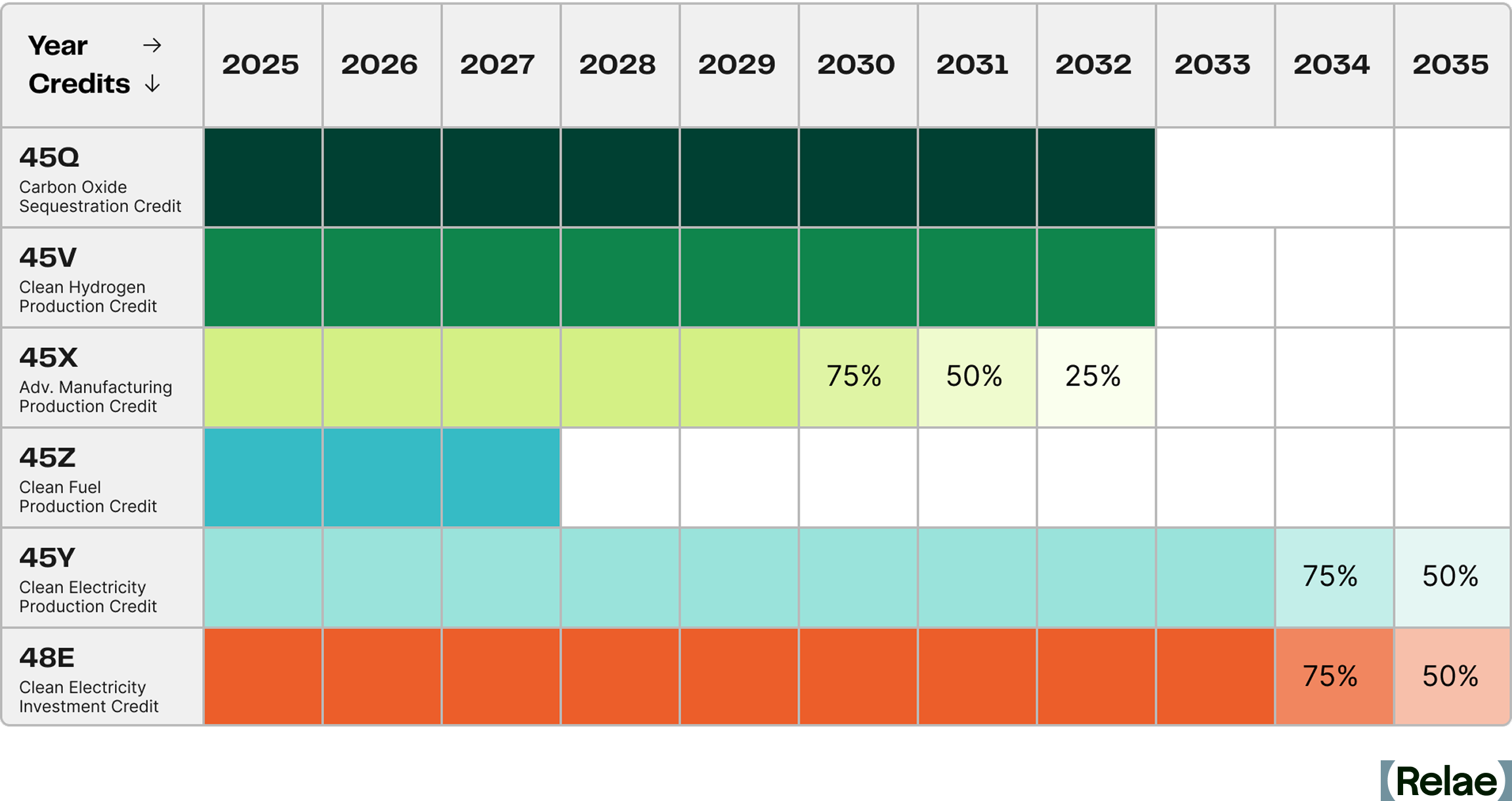
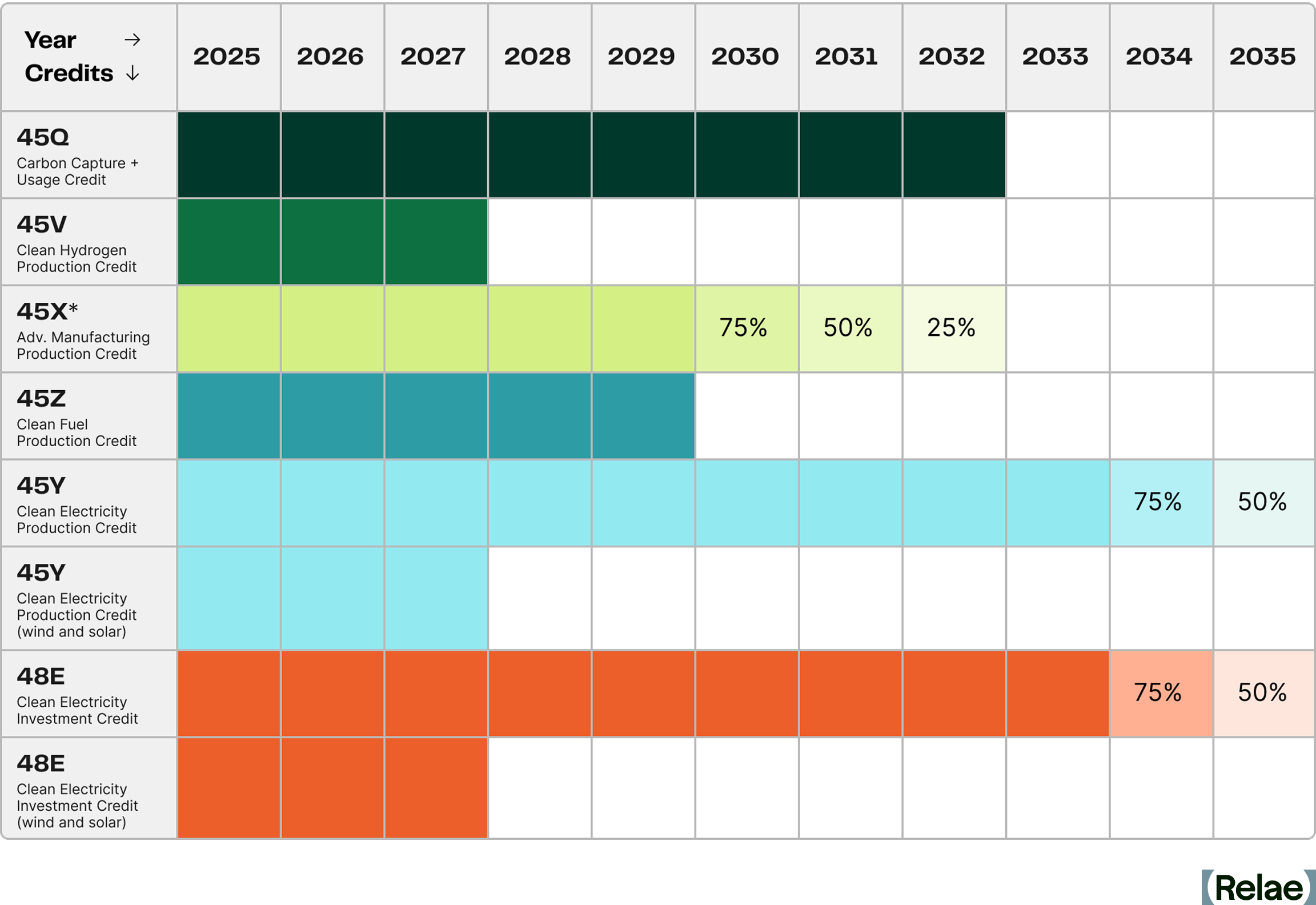
Many of the incentives to deploy clean energy that were created or enhanced under the IRA will be phased out early or repealed altogether. Credits with accelerated phase-out schedules include the newly created 45Y clean electricity production tax credit, which will no longer support wind or solar projects after 2027, and the 45V credit for clean hydrogen production for which projects must now commence construction before Jan 1, 2028 (moved up from Jan 1, 2033).
Since the passage of the reconciliation package, there has been active litigation on several provisions, including an order from a federal district court to vacate IRS guidance that would have prohibited certain wind and solar projects from securing safe harbor. The table below provides a detailed breakdown of key changes to major tax credits between the original IRA, the draft that moved through Committees in the House, and the final text that was passed by the Senate and signed into law.
Major Tax Credit Changes in the Reconciliation Law
How FEOC Restrictions Threaten Clean Energy Supply Chains
Many clean energy tax credits include ambiguous language restricting projects connected to FEOC, complicating supply chains and creating new problems for developers of clean energy projects. The law also introduces a complex matrix of new definitions, such as "Prohibited Foreign Entities," which includes both "Specified Foreign Entities" and "Foreign-Influenced Entities."
The FEOC restrictions embedded in the reconciliation bill represent a seismic shift for clean energy developers. These new rules, designed to limit the influence of Covered Nations (China, Russia, North Korea, and Iran), will disqualify projects from receiving tax credits if they source components, minerals, or intellectual property from entities tied to these nations. In other instances, the partial ownership or investment of an entity with financial ties to a Prohibited Foreign Entity may also disqualify a project from qualifying for tax credits.
This FEOC language matters for developers and investors because of the resulting global supply chain disruptions, investment uncertainty, and compliance burdens. The clean energy sector is deeply reliant on global supply chains, especially for solar panels, batteries, and wind components, industries where China currently dominates. The IRA intended to counter this by moving the manufacturing and production of these supply chains to the US. Project developers must now thoroughly review their supply chains and capital providers, and may need to quickly pivot to compliant resources.
In February 2026, the IRS released interim guidance on the FEOC provisions to provide safe harbor guidance for clean energy manufacturing, investment, and production credits to help taxpayers gauge whether material assistance was provided by a prohibited foreign entity.
Other Major Rollbacks to the IRA
Beyond clean energy tax credits, the reconciliation package also repeals and rescinds many other IRA provisions. This includes a full rescission of all unobligated IRA appropriated balances at the Department of Energy's Loan Programs Office, and several other programs, including:
- The Tribal Energy Loan Guarantee Program
- Greenhouse Gas Reduction Fund
- Transmission Facility Financing
A complete list of rescissions of energy-related funding is outlined in Sections 60001-60024 and 50402 of the law. These rescissions represent tens of billions of dollars in lost climate investments made under the IRA, which would have provided funds to state, local, and Tribal governments, federal agencies, non-profits, and commercial project developers to reduce emissions and update critical infrastructure.
What Can Project Developers and Other Companies Do?
Developers will need to act quickly to meet updated commence construction and place into service requirements, though circumstances are technology specific (e.g., safe harbor updates to 48E and 45Y). Tax credits generally have advanced commence construction and operational deadlines, resulting in a strong first-movers advantage. Companies should also review their supply chains and revise equipment and material procurement sourcing plans as necessary to address restrictions presented in the reconciliation bill.
An executive order from President Donald Trump issued on July 7 will further complicate how companies proceed. In the EO, the President directs his administration to "strictly enforce the termination of […] 45Y and 48E […] for wind and solar facilities." The Administration will likely issue extremely strict interpretations of "commence construction" clauses and FEOC requirements in forthcoming tax credit guidance issued by the Treasury Department, though these moves are quite likely to face litigation.
The new restrictions being proposed by the Administration, including specific details on FEOC, qualified equipment, commence construction, and other reporting requirements, will require additional guidance from the IRS and provide an opportunity for engagement through public comment. It is important that impacted companies weigh in during these public comment periods, not only to help inform and influence the final rules issued by the Administration, but also to build an administrative record that could support litigation efforts to strike down the final rules.
Staying Ahead of Policy Changes
Given the rapidly shifting landscape of energy policy, it's paramount that companies stay abreast of the latest changes and dedicate resources to understanding how they may be affected. Policy professionals, including the experts at Relae (formerly Carbon Direct), can support organizations as they engage in the regulatory process, anticipate and prepare for new legislation, and navigate the requirements to access essential tax credits and incentives. Even under new constraints, expert guidance can help maximize impact and minimize disruption.
Frequently Asked Questions
How does the reconciliation bill change the timelines for major clean energy tax credits?
Most clean energy tax credits saw their windows shortened relative to the original IRA:
- The 45Y and 48E credits now terminate entirely for wind and solar facilities placed in service after December 31, 2027, with a separate phase-down (75% in 2034, 50% in 2035, 0% after) for other technologies.
- The 45V clean hydrogen credit's "commence construction" deadline moved from December 31, 2032 to December 31, 2027.
- The 45Z clean fuel credit now ends on December 31, 2029 (versus 2027 in the original IRA, but bonuses for SAF have been removed and new emissions-calculation methods favor corn ethanol).
- Notably, the 45Q carbon capture credit saw little change and retained transferability, with credit values for enhanced oil recovery and utilization raised to match secure geological storage.
What are the FEOC restrictions, and why do they matter so much for developers?
FEOC ("Foreign Entity of Concern") restrictions disqualify projects from tax credits if they source components, minerals, or intellectual property from entities tied to China, Russia, North Korea, or Iran. Even partial ownership or investment ties to a "Prohibited Foreign Entity" can trigger disqualification. The definitions are complex and still being clarified through IRS guidance, meaning developers need to review supply chains and capital providers carefully and may need to pivot to compliant sourcing.
What should project developers do now in response to these changes?
Developers should move quickly to meet the earlier "commence construction" and "placed in service" deadlines, since credits now benefit early actors. This includes reviewing and potentially restructuring supply chains and procurement plans to address FEOC restrictions, and closely monitoring forthcoming IRS/Treasury guidance.
Scope 2 Emissions Explained: Tracking, Reporting, and Reducing Impact
Key Takeaways
- Scope 2 emissions (indirect emissions from energy use) are increasingly critical to address. With surging electricity demand, especially from data centers, scope 2 is a growing share of corporate emissions and a priority for decarbonization.
- Approaches to scope 2 accounting are evolving—and formal changes are now on the table. Both location-based and market-based methods remain accepted under the Greenhouse Gas Protocol. Still, the Protocol's recently closed public consultation proposes more granular approaches, including 24/7 power and carbon matching, that would better reflect the realities of modern power markets.
- Proven decarbonization levers, such as reducing energy use, entering power purchase agreements, procuring green tariffs, and buying high-quality renewable energy certificates, are already available and impactful. Decarbonization, not just measurement, must be the goal. Companies don’t need to wait to decarbonize.
Accounting for Indirect Emissions From Energy Use
As businesses and organizations strive to reduce their environmental impact, carbon accounting has become an essential tool for tracking and managing greenhouse gas (GHG) emissions. Carbon accounting helps organizations measure, report, and mitigate their emissions across various activities. A key framework for categorizing these emissions is the Greenhouse Gas Protocol (GHG Protocol), which classifies emissions into three scopes:
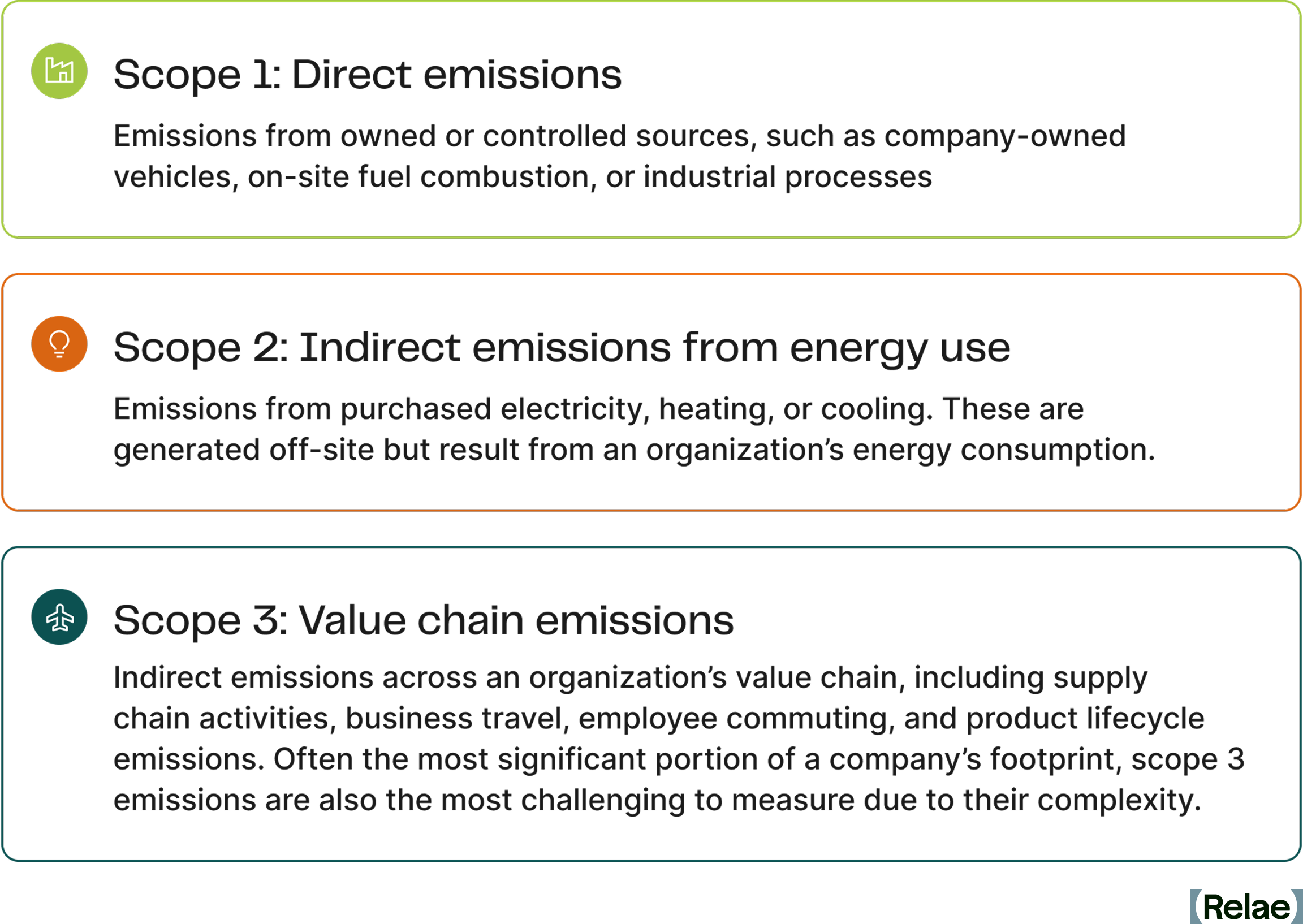
Each scope presents unique challenges and opportunities for reduction. Among them, scope 2 emissions are particularly significant because they stem from purchased energy, which is often generated using fossil fuels. However, numerous reduction mechanisms exist today to help organizations eliminate these emissions, such as improving energy efficiency in order to use less energy, and transitioning to renewable energy sources through market-based mechanisms. Understanding scope 2 emissions is crucial for businesses looking to contribute meaningfully to the global energy transition and achieve sustainability goals.
What Are Scope 2 Emissions?
Scope 2 emissions refer to indirect GHG emissions associated with the consumption of purchased energy. Unlike scope 1 emissions, which result from direct fuel combustion, scope 2 emissions arise from the generation of electricity, steam, heat, or cooling that a company procures from external sources.
The primary sources of scope 2 emissions include:
Purchased electricity: When businesses buy electricity from a utility provider, the emissions from power plants that generate this electricity are classified under scope 2.
Purchased heat, steam, and cooling: Some companies purchase heat, steam, or cooling services instead of generating them on-site. These services often come from centralized facilities that may rely on fossil fuels, thereby contributing to scope 2 emissions.
What sets scope 2 emissions apart from other scopes is the presence of market-based mechanisms that offer multiple pathways for organizations to reduce their carbon footprint. Unlike scope 1, where emissions reductions often require technological shifts or operational changes, scope 2 reductions can be achieved through strategic procurement decisions. The transition to renewable energy sources is an essential component of sustainability strategies, setting the stage for a broader energy transition across industries and economies.
How Are Scope 2 Emissions Measured Today?
The GHG Protocol currently outlines two primary approaches for calculating scope 2 emissions: the location-based method and the market-based method.
Location-Based Method
The location-based method calculates emissions for electricity consumption based on the average emissions intensity of the grid where the energy consumption occurs. This approach is mandatory under various reporting frameworks and does not take into account a company’s procurement choices.
- Relies on grid averages: Emissions are calculated based on regional grid emissions factors rather than specific energy purchases.
- Time-delayed data: Since grid emissions factors are typically updated annually, this method may not reflect real-time energy sourcing changes.
- Limited control: Companies using this method have less direct influence over their reported emissions, as they depend on the overall energy mix of their region.
Market-Based Method
The market-based method, on the other hand, reflects an organization’s actual procurement decisions and energy-sourcing strategies. It accounts for specific contracts, such as power purchase agreements (PPAs), renewable energy credits (RECs), and green tariffs, which allow businesses to claim lower emissions from their purchased electricity.
- Reflects company choices: Emissions calculations take into account contractual agreements for renewable energy purchases.
- Mechanism for electricity transition: Encourages organizations to invest in low-carbon electricity options and actively support the transition to renewables.
- Multiple reduction options: Companies can reduce their scope 2 emissions through a portfolio of mechanisms like PPAs, RECs, and green tariffs, making this method a flexible and strategic tool for decarbonization.
While market-based mechanisms provide flexibility in reducing scope 2 emissions, they also highlight the need for more precise and updated carbon accounting methodologies. For example, some decarbonization strategies, such as time-shifting energy consumption to better match renewable generation, are not accounted for under these methods. This and other limitations mean that the traditional methods outlined in the GHG Protocol are increasingly seen as outdated in an era of rapid changes in energy generation and grid dynamics. As a result, the market is shifting toward more advanced power emission accounting methodologies that provide a more accurate reflection of emissions associated with electricity use.
Proposed Changes to the GHG Protocol Scope 2 Guidance
The current GHG Protocol Scope 2 Guidance provides a market-based instrument methodology, originally designed in the early 2000s, that allows US-based companies to procure renewable energy at any point within a year from anywhere in North America and apply it to any of its annual electricity consumption within that same year. This methodology, as written, allows for a potentially significant mismatch of “emissions caused” (by consuming electricity) versus “emissions avoided” (by generating renewable electricity) in that it does not account for any of the realities of electric grids and generators, which vary significantly over different regions, seasons, and time of day.
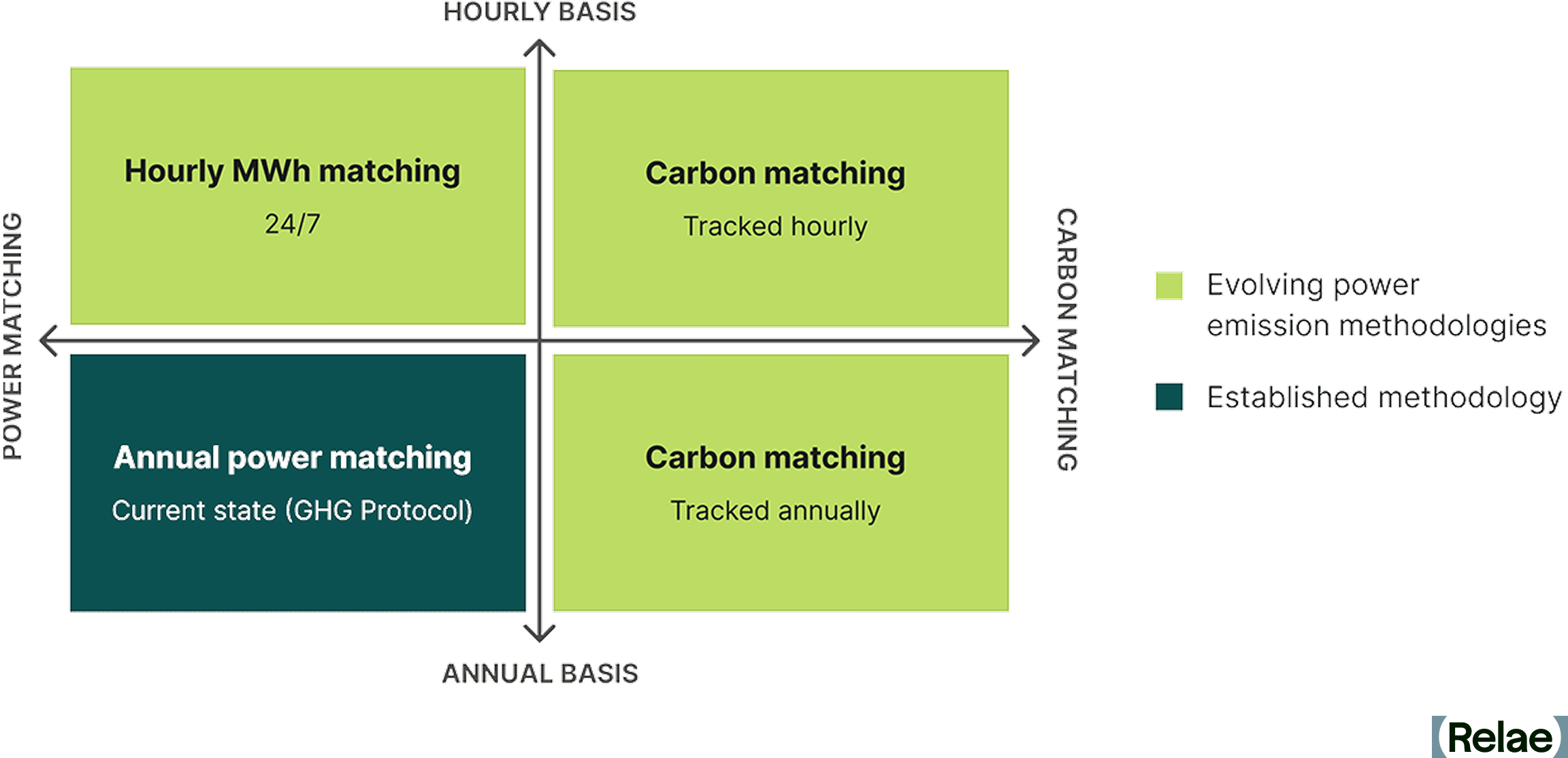
In response to this, the GHG Protocol Scope 2 Guidance is currently undergoing a revision process, which will include how emissions associated with electricity consumption are calculated. A focus of the revision process is on how to better account for the real emissions associated with a corporate’s electricity consumption, and more impactful ways of mitigating them through market-based instruments and other approaches. Advanced power emission accounting methodologies, such as 24/7 power matching and carbon matching, are being explored as ways to better represent the GHG emissions associated with electricity consumption.
- 24/7 power matching emphasizes matching electricity consumption with an equivalent amount of renewable energy production on an hourly basis.
- Carbon matching emphasizes measuring the emissions impact of incremental electricity consumption or production at a specific time.
These emerging methodologies propose a shift toward more granular temporal and region-specific matching, which could require companies to rethink their emissions reporting approach and explore more advanced tracking tools. They may also introduce new strategies beyond market-based instruments for reducing scope 2 emissions, such as time-shifting energy consumption.
As power grids continue to decarbonize and new digital tools emerge, businesses will need to adapt to these evolving methodologies to remain compliant, enhance sustainability strategies, and achieve meaningful reductions in emissions. Companies that proactively integrate advanced power emission tracking into their carbon accounting strategies will be better positioned to lead in the transition to a low-carbon economy.
How to Reduce Scope 2 Emissions
The GHG Protocol provides multiple mechanisms for reducing scope 2 emissions, allowing organizations to shift their energy consumption toward lower-carbon alternatives. These include:
- Reducing energy consumption: Improving energy efficiency in operations can significantly lower electricity use. In some cases, this involves capital investments in more energy-efficient equipment, but in other cases, it can be based on operational changes such as reducing unnecessary lighting, HVAC, and other services during non-working hours. (Electrification efforts, such as shifting from fossil fuel-powered systems to electric alternatives, may actually increase scope 2 emissions, but this can ultimately reduce overall emissions by correspondingly decreasing scope 1 emissions and allowing for renewable energy procurement.)
- RECs: Companies can purchase unbundled RECs (emissions “attributes” separated from the actual electricity product) to offset emissions associated with purchased electricity. While there has been criticism of RECs due to their significant range in quality, high-quality RECs are available, which may include ensuring regional matching, financial additionality, on-line date additionality, or tighter temporal generation to consumption matching. The use of high-quality unbundled RECs is the most accessible and realistic option for most smaller-scale companies to address scope 2 emissions.
- On-site generation and co-location: Installing on-site renewable energy generation, such as solar panels, allows companies to directly offset their electricity consumption from the grid. In some commercial settings, such as companies using leased real estate or co-located data centers, partnering with facilities that prioritize renewable energy procurement can help reduce scope 2 emissions for the facility owner while the facility occupant reduces scope 3 emissions.
- PPAs: Entering into long-term contracts with renewable energy providers ensures companies receive electricity from clean energy sources while supporting the expansion of renewable generation capacity. PPAs are available with standardized contract terms, and some service providers will aggregate demand from multiple smaller companies to reach the minimum required amount for typical PPA contracts. Hedging products are also available to reduce market risks.
- Green tariffs: Many utilities offer green tariffs that enable businesses to purchase renewable energy directly through their electricity provider, often at a premium but with lower emissions impact. For many smaller companies, this is a more viable approach than a PPA with a single renewable generator.
By adopting a combination of these strategies, businesses can significantly lower their scope 2 emissions while aligning with broader sustainability goals and regulatory requirements. The path to decarbonization requires proactive investment in cleaner energy sources, efficient consumption practices, and leveraging market-based instruments to drive the transition toward a low-carbon future.
Why Does Reducing Scope 2 Emissions Matter?
Reducing scope 2 emissions is the underpinning of decarbonizing the power sector and enabling the global energy transition. In 2025, S&P reported that corporate buyers added 15.2 GW of renewable capacity in the US, up from 9.1 GW in 2024, illustrating the growing impact of the corporate sector on the electricity grid. Cleaner grids translate to lower emissions for all energy users. Organizations that actively reduce their scope 2 emissions can contribute to decreasing demand for fossil fuel-based electricity and accelerate the deployment of renewable energy infrastructure.
For companies that own and operate data centers, this transition is especially important. AI data centers consume large amounts of electricity, and their reliance on purchased power makes them a significant source of scope 2 emissions. Since many businesses rely on third-party data center services, reducing emissions from these facilities also helps lower scope 3 emissions across industries. Corporates can influence data centers by requiring that they have a clear and explicit low-emission power strategy in place before procurement.
Beyond direct corporate benefits, reducing scope 2 emissions has a tangible long-term impact on power grids. Increased investment in renewable energy procurement sends a strong market signal, encouraging utilities and developers to expand clean energy projects. As more companies commit to sourcing renewable energy, the overall mix of grid power shifts, making low-carbon electricity more accessible and reducing reliance on fossil fuel-based generation. Ultimately, widespread corporate action in scope 2 emissions reduction supports the broader decarbonization of power markets and strengthens global climate commitments.
Frequently Asked Questions
Will RECs (renewable energy certificates) still count toward scope 2 reductions under the GHG Protocol's proposed changes?
Under the current Scope 2 Guidance, yes—RECs remain a valid market-based instrument. The proposals from the GHG Protocol's recent consultation range from retaining market-based accounting with stricter quality criteria to restructuring how instrument-based claims are reported altogether, and nothing is final until the revised standard is published. What's clear is that scrutiny is rising, particularly for unbundled RECs with weak temporal or geographic connection to a company's actual consumption, so prioritizing high-quality RECs now is the best way to future-proof a procurement strategy.
How would the proposed hourly and regional matching requirements affect companies that rely on unbundled RECs today?
Hourly (24/7) and regional matching would require renewable generation claims to line up much more closely with when and where a company actually consumes electricity. Companies relying on annually matched, unbundled RECs sourced from distant grids would likely see their reported market-based emissions rise under such requirements. The practical preparation is to start collecting more granular (ideally hourly) consumption data and shift toward RECs and contracts with tighter regional and temporal matching.
What's the practical difference between location-based and market-based scope 2 accounting, and will that distinction survive the GHG Protocol's revision?
The location-based method calculates emissions using the average emissions intensity of the local grid, regardless of procurement choices, while the market-based method reflects a company's actual contracts, such as PPAs, RECs, and green tariffs. The consultation explored options from strengthening the criteria for market-based claims to reporting emissions and market instruments in separate, complementary statements. Both concepts will exist in some form, but companies should expect the requirements behind market-based claims to tighten.
When is the new Scope 2 Guidance expected to take effect, and what should companies do now to prepare?
Per the GHG Protocol's July 2026 development plan, a draft of the revised consolidated Corporate Standard is expected for public consultation in 2027, with a final published standard currently estimated for late 2028, and adoption timelines will follow publication. Companies should take action now. Energy efficiency, PPAs, green tariffs, and high-quality RECs reduce real emissions under any accounting regime. Building hourly consumption tracking and auditing the quality of existing REC portfolios now will make any future transition smoother.
The Business Case for Carbon Accounting: What It Is and Why It Matters
Key Takeaways
- Carbon accounting is a regulatory and strategic necessity, with policies like the European Union’s Corporate Sustainability Reporting Directive (CSRD) and California’s SB 253 requiring emissions tracking.
- Many companies track emissions inconsistently, underscoring the need for structured, repeatable carbon accounting to ensure accuracy and impact.
- Accurate carbon data drives efficiency and risk management, helping organizations reduce costs, streamline supply chains, and comply with climate regulations.
- Scope 2 emissions are increasingly challenging to quantify, especially for data centers and power-intensive operations. Grid-average emissions factors mask location-specific and time-specific variations that drive real procurement and siting decisions. Precise scope 2 accounting requires understanding which generators actually serve the load, when, and under what grid conditions.
- Scope 3 emissions have historically been a complex challenge, requiring better supplier engagement, standardized reporting, and expert guidance to support accuracy.
Carbon Accounting: More Than Compliance, a Strategic Advantage
Companies increasingly recognize the business value of reporting carbon emissions: it reduces regulatory risks, attracts sustainability-focused investors, enhances market competitiveness, and drives cost savings through efficiency. Transparent emissions reporting strengthens brand trust and aligns companies with global sustainability standards, ultimately turning climate accountability into a strategic advantage.
Yet, many companies struggle with incomplete and inconsistent tracking. According to the State of Corporate Climate Commitment, 80% of corporate professionals surveyed have tracked emissions at least once, but only 52% do so annually. Without a structured process and reliable data, businesses face compliance risks, financial penalties, and missed cost-saving opportunities.
This guide provides a clear roadmap to effective carbon accounting, equipping businesses with the knowledge to navigate regulations, enhance data accuracy, and implement effective strategies for compliance and operational success.
[stat]
What Are the Benefits of Effective Carbon Accounting?
By embedding annual carbon accounting into operations, organizations can enhance sustainability efforts while achieving financial and strategic benefits. Key benefits include:
Enhancing Transparency and Accountability
By providing accurate and verifiable emissions data, companies can showcase corporate responsibility and build a foundation of transparency. Aligning with recognized standards like the GHG Protocol strengthens confidence among investors and regulators. As climate disclosure laws tighten globally, ensuring credible emissions reporting reduces regulatory risks and enhances stakeholder trust. This commitment to authenticity minimizes the risk of greenwashing and strengthens brand reputation.
Guiding Regulatory Compliance and Risk Mitigation
Businesses navigating evolving environmental regulations must proactively align with policies to avoid financial and legal risks. Mandated emissions reporting, under policies like the European Union’s Corporate Sustainability Reporting Directive (CSRD) and Carbon Border Adjustment Mechanism (CBAM) as well as California’s SB 253, ensures compliance and enhances corporate accountability. Staying ahead of these evolving requirements prepares businesses for future policy shifts and safeguards their long-term resilience.
Improving Operational Efficiency and Reducing Costs
By analyzing energy consumption patterns, organizations can identify operational inefficiencies, optimize supply chains, and implement cost-saving measures while reducing carbon emissions. For example, evo, an outdoor experiences company, collaborated with Relae (formerly Carbon Direct) to assess its carbon footprint. This analysis revealed opportunities to reduce emissions across facilities, products, and shipping. By promoting sustainable practices throughout their supply chain, evo enhanced both environmental performance and operational efficiency.
Building a Competitive Advantage in a Low-Carbon Economy
Building a competitive advantage in a low-carbon economy requires prioritizing emissions transparency and sustainability. Companies that integrate emissions transparency into their operations build stronger relationships with supply chain partners and meet consumer demand for responsible brands. Aligning corporate values with sustainability fosters long-term customer loyalty and enhances market positioning.
Driving Strategic Planning and Net-Zero Alignment
Setting and tracking net-zero commitments requires structured, data-driven carbon reduction roadmaps. Businesses that measure emissions annually are more likely to set public sustainability goals and take action. Carbon accounting supports clean energy transitions, fosters supply chain collaboration, and integrates carbon removal strategies to address residual emissions. By embedding emissions measurement into long-term planning, organizations facilitate resilience and profitability in an evolving business landscape.
Carbon emissions measurement correlates to climate action: 61% of companies that calculate their footprint annually have both set a public goal and begun working toward it.
What Is Carbon Accounting? The Basics You Need to Know
Carbon accounting is the systematic measurement, analysis, and reporting of an organization's greenhouse gas (GHG) emissions. Using standardized metrics like carbon dioxide equivalent (CO₂e), companies can assess emissions across operations and supply chains, identify high-impact areas, and set and track progress toward emissions reduction targets. When conducted annually, carbon accounting supports regulatory compliance, risk management, and decarbonization strategies essential for long-term sustainability.
The GHG Protocol is the most widely used framework for carbon accounting, setting the baseline for how organizations measure and report their emissions. It classifies emissions into three scopes:
Keep in mind that scope 2 emissions are increasingly difficult to quantify using traditional methods, which fail to account for real-time grid fluctuations and locational energy variations. Cutting-edge, advanced carbon accounting methodologies now provide more precise tracking, particularly benefiting large power consumers like enterprise data centers and hyperscalers.
Scope 3 emissions also continue to pose a great challenge, requiring extensive data collection and supplier coordination, complexities that are difficult to navigate without expert guidance.
The Corporate Carbon Accounting Process: A Step-by-Step Guide
The carbon accounting process involves systematically measuring, analyzing, and managing an organization’s greenhouse gas emissions across its operations, supply chain, or product life cycle.
- Collect emissions data across all three scopes (scope 1, scope 2, and scope 3).
- Categorize and quantify emissions from each source to estimate the total impact.
- Verify data and report findings to promote compliance, accuracy, and transparency.
- Develop and implement reduction strategies based on insights from the data.
Activity Data Versus Spend Data
Carbon measurement primarily relies on two data types: activity data and spend data.
- Activity data includes direct measurements reflecting the physical amount of an emitting source, such as fuel consumption (in liters or gallons) or travel distance (in kilometers or miles). It accurately represents emissions from a particular operational emission source and allows for measurable decarbonization strategies.
- Spend data serves as an alternative when activity data is unavailable. It estimates emissions based on financial expenditures related to goods, services, or travel. While less precise, it is useful for approximating scope 3 emissions, where direct measurement is often challenging.
Tips for Accurate Data Collection
Effective carbon accounting relies on seamless collaboration across departments, suppliers, and external data sources. Key strategies include:
- Stakeholder engagement: Finance, operations, procurement, and sustainability teams must coordinate to track and validate emissions data. Engaging suppliers is essential for capturing and reducing scope 3 emissions.
- Addressing data gaps: When data is unavailable, proxy data can be used to estimate emissions, but it should be a temporary solution while organizations work toward obtaining accurate, real-world data.
- Standardization and verification: Implementing consistent methodologies and third-party audits enhances the credibility of carbon reporting, building stakeholder trust.
By leveraging precise data, understanding emission scopes, and adopting structured data collection methods, organizations can create a transparent, science-based approach to carbon accounting and lay the foundation for meaningful climate action.
Climate Standards Businesses Need to Know
Global standards and regulations define carbon accounting methodologies by establishing guidelines for how organizations set boundaries, measure, and disclose emissions. Several key frameworks and policies guide both the international and regulatory levels.
Guidance frameworks
GHG Protocol: The Foundation of Carbon Accounting
- The GHG Protocol is the most widely adopted framework for measuring and managing emissions across organizations globally.
- Developed by the World Resources Institute (WRI) and the World Business Council for Sustainable Development (WBCSD), it provides common standards for businesses, governments, and supply chains.
- Sector-specific guidance has been developed for industries such as energy, finance, manufacturing, and agriculture, which face stricter reporting requirements than service-based sectors.
- The GHG Protocol is currently undergoing its first major revision since its launch. Partnering with the International Organization for Standardization (ISO) to co-develop a consolidated corporate standard that merges the Corporate Standard, Scope 2 Guidance, Scope 3 Standard, and Actions and Market Instruments standard with ISO 14064-1. As of mid-2026, the effort is in active technical development, with a draft opening for public consultation targeted for mid-2027 and a final published standard expected by the end of 2028. Current standards stay in effect until that replacement is finalized, so nothing changes for reporting yet.
ISO 14064: Standardized Emissions Quantification and Reporting
- The ISO 14064 series, created by the International Organization for Standardization (ISO), offers detailed methodologies for greenhouse gas accounting.
- It includes guidelines for organization-level emissions quantification, reporting, and reduction projects.
- ISO 14064 serves as the foundation for independent verification and compliance with voluntary carbon markets, enhancing the credibility of emissions reduction projects.
Policies
EU CSRD: Expanding Mandatory Climate Disclosure
- The Corporate Sustainability Reporting Directive (CSRD) enforces detailed sustainability reporting requirements for companies operating in the EU.
- Following the EU's 2025 to 2026 Omnibus simplification package, CSRD's scope narrowed sharply. It now applies to roughly 5,000 large companies, with new thresholds of more than 1,000 employees and more than 450 million euros in net turnover (up from the original 250 employees and 50 million euros)
- In scope companies must still report scope 1, 2, and 3 emissions data aligned with the EU Taxonomy and European Sustainability Reporting Standards (ESRS).
California SB 253: State-Level Mandatory Emissions Disclosures
- California’s SB 253 Climate Corporate Data Accountability Act sets strict emissions reporting mandates within the US.
- It applies to companies with over US$1 billion in revenue doing business in California, requiring scope 1 and 2 emissions reporting by November 2026..
- CARB has said scope 3 reporting and third-party assurance requirements will be addressed in a subsequent rulemaking covering 2027 and beyond.
EU CBAM: Preventing Carbon Leakage and Promoting Decarbonization
- The Carbon Border Adjustment Mechanism Requirements (CBAM) requires importers of specific carbon-intensive goods to disclose embedded emissions to prevent carbon leakage and promote global decarbonization by ensuring that domestic and foreign producers face comparable carbon costs.
- During the transitional phase (2023–2025), importers were required to submit quarterly reports on embedded emissions.
- As of 2026, they must purchase CBAM certificates to compensate for the carbon footprint of imported goods.
Although carbon accounting requirements vary across regions and industries, they are all fundamentally rooted in the principles established by the GHG Protocol and ISO 14064. As global regulations like the EU CSRD and state-level legislation evolve, organizations must proactively align with these stricter standards to mitigate regulatory risks and support compliance with emerging sustainability expectations.
What Are the Industry-Specific Challenges of Carbon Accounting?
Carbon accounting presents unique challenges across industries due to varying operational structures, emissions sources, and reporting requirements. While the challenges outlined below focus on financial services, data centers, and philanthropies, similar complexities exist across manufacturing, transportation, healthcare, and other sectors. Tailored strategies are essential to effectively addressing these complexities.
Data Centers: Measuring and Reducing Scope 2 and 3 Emissions
Data center operators consume vast amounts of electricity making scope 2 emissions a major concern. In addition, data center developers and owners face significant scope 3 emissions from embodied carbon from the building materials and the IT hardware required to develop these assets. Effective strategies to reduce data center emissions include:
- Optimizing computing needs and power usage: Use real-time metering and AI-powered analytics to optimize electricity usage across time and locations.
- Procuring low-carbon electricity: Secure long-term access to compliant low-carbon electricity through power purchase agreements (PPAs) or high-impact renewable energy credits (RECs).
- Tracking life cycle emissions: To provide a comprehensive emissions assessment, account for embodied carbon in server manufacturing and end-of-life disposal.
Financial Services: Assessing Emissions From Investments and Portfolios
Financial institutions face significant challenges in evaluating scope 3 financed emissions from investments, loans, and asset portfolios. Key strategies to address these challenges include:
- Adopting industry standards: Frameworks like the Partnership for Carbon Accounting Financials (PCAF) can be used to standardize emissions calculations.
- Understanding asset level data: To accurately report on financed emissions, investors need visibility of emissions data, ideally at the company level.
- Prioritizing green investment strategies: Shift toward sustainable finance by integrating sustainability criteria and emphasizing green bonds or low-carbon funds or investments.
- Ensuring regulatory compliance: To enhance transparency, align with global disclosure frameworks like the International Sustainability Standards Board's (ISSB) IFRS S2 climate-related disclosure standard.
Philanthropies: Managing Emissions From Private Financing
Philanthropic organizations face challenges in tracking emissions across diverse funding activities, operational footprints, and investment portfolios. Effective strategies include:
- Assessing grantmaking impact: Many philanthropies support climate initiatives but may not track the carbon impact of grantees or funded projects. Establishing emissions metrics for grants can enhance transparency and effectiveness.
- Measuring operational emissions: While some philanthropies have relatively low direct emissions, travel, events, and office space still contribute to their carbon footprint. Implementing sustainable operations policies can help reduce emissions.
- Decarbonizing investment portfolios: Endowments and investment funds often hold assets with varying GHG emissions. Aligning investments with sustainability goals and engaging with asset managers on emissions reduction can drive impact.
Organizations across these sectors can enhance emissions transparency, improve sustainability efforts, and align with global climate goals by implementing industry-specific carbon accounting methods.
Navigating Evolving Standards and Scope 2 Complexity
Carbon accounting standards are actively evolving. In October 2025, the GHG Protocol released two proposals for scope 2 accounting revisions, with final standards expected by 2027. The proposals shift toward hourly and regional renewable energy matching, moving away from today's annual, region-agnostic approach. They also introduce consequential methodology that calculates actual emissions displaced by renewable projects, which varies significantly by region.
For organizations with 2030 climate targets, timing matters. Existing long-term contracts are expected to be grandfathered in under new rules. Meanwhile, new renewable projects face interconnection delays of 3 to 5 years, and the US power grid is experiencing sustained demand growth driven largely by data centers. These pressures converge: power demand is rising while new clean electricity supply is constrained.
Navigating these changes requires understanding emerging methodologies and their strategic implications. See our companion pieces on Navigating Scope 2 Accounting Changes and Scope 2 Emissions Explained for detailed context.
Frequently Asked Questions
How long does carbon accounting implementation take?
Initial measurement typically takes 3 to 6 months, depending on data availability and organizational coordination. Starting with data you already have (utility bills, fuel records) accelerates the process. Scope 2 and scope 3 require more extensive work than scope 1, so actual timelines vary based on which scopes are your focus.
What are the biggest obstacles to getting accurate emissions data?
Data siloes across departments (finance, operations, procurement track separately). For scope 2, grid-average factors mask location- and time-specific variations that actually drive emissions. For scope 3, extensive data collection and supplier coordination are required. Seamless collaboration across departments is essential.
Do we need to measure all three scopes to start?
Yes. Organizations should measure all three scopes. Start where your business is most materially affected, but eventually measure all three for compliance and complete visibility into your emissions sources.
How to Measure Your Carbon Emissions
Key Takeaways
- Inventory before you calculate: carbon accounting means collecting activity or spend data across scope 1 (direct), scope 2 (purchased energy), and scope 3 (value chain) emissions for a full year of operations, then converting the results into CO2e using GHG Protocol-aligned emission factors.
- Measurement matters even as rules shift: disclosure requirements like California's SB253 and the EU's CSRD keep evolving, but many companies measure and report emissions voluntarily anyway, to set a baseline for climate targets and meet investor and customer expectations.
- Scope 2 is getting more complex: rising electricity demand from AI and data centers, combined with upcoming GHG Protocol changes to how renewable energy purchases are counted, make an accurate, current scope 2 measurement more valuable than ever.
- Verify before you report: independent review, internal or external, catches errors like double counting and miscategorization before emissions data goes to stakeholders or regulators.
- Annual measurement is what makes the strategy real: repeating the process every year turns a one-time emissions snapshot into a carbon management plan you can track, report, and act on over time.
What Is the Carbon Accounting Process?
Carbon measurement, or carbon accounting, is the process of estimating the greenhouse gas (GHG) emissions from business activities by taking an inventory of a company’s operations. The process calculates greenhouse gas emissions, measured in metric tonnes of CO2 equivalent (CO2e), to provide a holistic picture of emissions over an entire year of operations.
Why Measure Your Greenhouse Gas Emissions?
Climate disclosure regulations continue to shift. California's SB253 is now active law, with an initial scope 1 and scope 2 reporting deadline in November 2026. The EU's CSRD remains in effect, though 2026 reforms narrowed which companies fall under it. In the US, the SEC's 2024 climate disclosure rule is now the subject of a formal rescission proposal. Even as these rules evolve, many companies continue to measure and report emissions voluntarily to meet investor and customer expectations.
Scope 2 accounting for purchased electricity is entering its own period of change. AI and data center growth is driving unprecedented demand on the grid: NERC's January 2026 Long-Term Reliability Assessment projects North American summer peak demand rising 24% (224 gigawatts) over the next decade, with new data centers cited as the primary driver. At the same time, the GHG Protocol is revising its scope 2 guidance toward hourly, regional matching of renewable energy purchases, with final standards expected by 2027. A clear, current measurement of your scope 2 emissions puts you in a stronger position to adapt your electricity and renewable energy strategy as these rules take shape.
Measuring emissions also provides a baseline for setting climate targets and deciding where to start reducing emissions. Repeating the measurement process annually allows you to track and report progress in a clear, transparent way to ensure that stakeholders—regulators, employees, investors, and customers—are informed about your climate action and impact.
How to Measure Your Carbon Emissions
Step 1: Collect Data
A company’s emissions represent the greenhouse gases emitted from everyday activities such as heating an office, shipping merchandise, traveling to a conference, or producing a physical product.
Emissions Sources: Scope 1, 2, and 3
To calculate your organization’s carbon emissions, you’ll need to collect data from all emissions-generating sources. These sources are divided into three categories, defined by scopes, according to the GHG Protocol:
- Direct emissions (scope 1): Produced from owned or controlled sources such as fuel purchased and consumed onsite for operating facilities and vehicles.
- Indirect emissions (scope 2): Generated from purchased energy such as purchased electricity for powering offices and facilities.
- Value-chain emissions (scope 3): Generated from the direct and indirect emissions from upstream and downstream value chains including purchased goods and services, business travel and employee commutes, and investments.
Types of Emissions Data
For all three emissions categories, there are two broad types of data to collect: activity data and financial spend data:
- Activity data uses units of measurement associated with the emissions-generating activity. For example, the liters of fuel consumed in a year, or the number of kilowatt-hours of energy used.
- Financial spend data, typically sourced from accounting teams and software systems, is used to estimate emissions from spending. Financial spend data may, for example, use the amount spent on business travel to estimate emissions.
Sourcing both activity data and spend data typically requires the help of a range of stakeholders across an organization. For example, facilities and office managers may provide fuel and electricity bills, while a company’s accountant may provide financial data.
While both approaches are valid under the GHG Protocol, there can be costs and benefits to the organization associated with different data sources and methodologies. You must weigh these carefully before aligning on an approach. Not all companies have the data infrastructure in place to support activity data across all of the scopes. While spend data is generally more accessible, it may not deliver a complete picture of emissions reductions—for example, if a company’s employees traveled fewer miles this year than last, but spent more on flights, using a spend data approach might result in an overestimate of emissions compared to an activity data approach.
Step 2: Calculate Your Emissions
To start calculating your emissions, you’ll need to determine the emission factor—the ratio between pollutants emitted and activity conducted or amount spent. For example: Because a gallon of gasoline emits 8.78 kg of CO2 when burned in an engine, the emissions factor would be 8.78 kg CO2 per gallon of gasoline.
Emissions factors are then multiplied by the associated activity or spend data, and the results are summed to estimate a company’s total emissions. To ensure consistent year-on-year reporting and auditability, the emissions factors used should be carefully documented and aligned with the GHG Protocol.
Step 3: Verify Data and Report Your Results
Once calculations are ready, the final step is to verify your information. Have a second internal team or an external expert carefully review the data to check for gaps and ensure it is correctly categorized by emissions source. This can help avoid errors like double counting and miscategorization. Under certain reporting requirements such as CSRD, an external audit is required.
Once data is verified, you can report your findings to internal stakeholders, and disclose it externally if you choose. This information should be presented in a clear, consistent format that includes both emissions data and final calculations broken down by source, as well as links to relevant data to back up your claims.
Step 4: Take Action and Track Progress
Now that you’ve reported the results, your internal stakeholders will be armed with the data they need to do the most critical next step: Set climate targets and take action. Reporting carbon emissions estimates establishes the climate impact of your business activities, allowing you to set realistic, informed targets.
From there, you might compare your total emissions with your competitors and identify your top emissions sources. Reports also help you identify the most achievable reduction opportunities and consider how to address your harder-to-abate emissions, helping you develop a comprehensive carbon management plan.
The carbon accounting process doesn’t stop once you’ve set your plan in motion: Tracking progress requires ongoing emissions measurement to produce annual emissions reports. Action coupled with ongoing carbon measurement is the foundation of an integrated carbon management strategy: It’s what allows you to assess, adapt, and optimize your sustainable transition plan. This gives you the data you need to see and prove your long-term progress, and confidently share your results with customers and investors.
[cta]
Scope 3.1 Emissions: How to Measure and Reduce Value Chain Impact
Key Takeaways
- Scope 3.1 emissions, purchased goods and services, can account for up to 67% of a company’s total carbon footprint, making them a critical category for measurement and action.
- Companies can reduce risk, meet stakeholder demands, and strengthen supply chain resilience by proactively managing scope 3.1 emissions.
- Relae empowers organizations to take meaningful action on scope 3.1 through science-based measurement, practical emissions management strategies, and deep supplier engagement.
What Are Scope 3 Emissions and Why Do They Matter?
Scope 3 emissions include all indirect greenhouse gas (GHG) emissions that occur across a company’s value chain. While scope 1 emissions are from directly owned or controlled activities, and scope 2 are indirect emissions from the generation of purchased electricity, heat, or steam, scope 3 emissions encompass upstream and downstream activities throughout the value chain.
Within scope 3, there are 15 categories, including activities such as raw material extraction, purchased services, shipping, business travel, product use, and end-of-life treatment. Critically, scope 3 emissions usually make up the majority of a company's total carbon footprint. Across sectors, CDP finds supply chain emissions average 26 times a company's operational emissions, and in supply-chain-heavy sectors like apparel, the share exceeds 95%.
Category 3.1 (purchased goods and services) is often the largest contributor. For many organizations, it can be as much as 67% of their total corporate footprint. Despite being outside a company’s direct operational control, scope 3 emissions are increasingly scrutinized by regulators, investors, and customers alike, making them essential to measure, manage, and reduce.
What Is Included in Scope 3.1 Emissions?
Scope 3.1 emissions capture all cradle-to-gate emissions associated with products and services procured by an organization. These include emissions from the extraction of raw materials, energy usage, manufacturing processes, waste, and transport and travel up to the point of delivery to the reporting company. As such, the types of activities within this category are quite extensive and disparate.
Examples of scope 3.1 items include:
- Raw materials (e.g., limestone, copper ore, lumber)
- Intermediate products (e.g., steel, electronic components, platform chemicals)
- Packaging materials
- Office supplies and equipment
- Professional services
- Cloud computing and software services
The size of scope 3.1 emissions varies widely by industry. For example, a consumer goods manufacturer sourcing large volumes of physical products may see a larger share of emissions in this category than the supplier providing the raw materials. For data centers that run on very low-carbon electricity, equipment and construction can account for 40% of lifetime emissions. For many organizations that are service-based or contract out manufacturing, scope 3.1 can be the most significant emissions category.
What Is the Strategic Value of Scope 3.1?
While scope 3.1 emissions fall outside a company’s direct operational control, they are not beyond its influence. Addressing emissions from purchased goods and services may open up a range of strategic benefits:
- Innovation opportunities through lower-carbon materials and production processes.
- Enhanced supplier relationships and engagement on shared sustainability goals.
- Improved resilience and risk mitigation across supply chains.
By assessing and acting on scope 3.1 emissions, companies can drive meaningful reductions and catalyze change throughout the entire supply chain.
What Are the Methods for Calculating Scope 3.1 Emissions?
There are four methods to calculate scope 3.1 emissions based on the data collected. Each offers a different balance of speed, accuracy, and scalability.
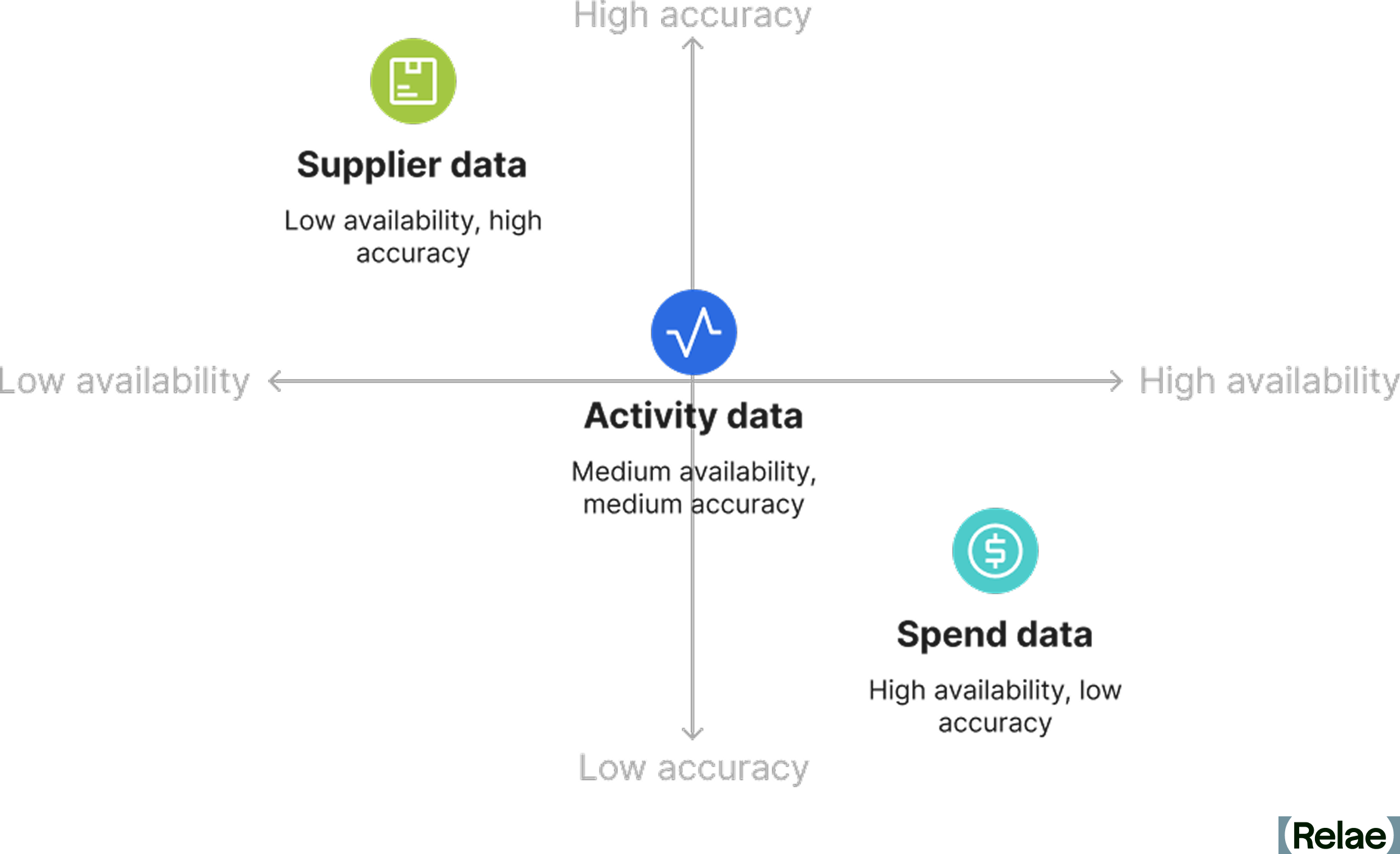
1. The Spend-Based Method
This approach multiplies the amount of money spent on a good or service by an economic emissions factor (e.g., kg CO₂e per dollar spent). Most companies use this approach as a starting point but transition to more accurate methods as they advance in their sustainability journey.
Advantages
- Fast and scalable across categories
- Useful for initial hotspot identification
- Helps fill data gaps when activity data is unavailable
Limitations
- Lower accuracy, especially during periods of inflation or economic volatility
- Cannot reflect actual emissions reductions by suppliers
- Misalignment between price and emissions (e.g., high-cost items may not be high-emission)
2. The Average Data Method
This method uses average emissions factors for goods or services, based on industry datasets. For instance, industry life cycle assessments (LCAs) might be used to estimate the emissions associated with a kilogram of steel purchased.
Advantages
- More accurate than spend-based
- Suitable for companies refining emissions data to enable targeted reductions
Limitations
- Lack of raw data granularity
- Geographic variation limited
3. The Supplier-Specific Method
The supplier-specific method is the most accurate approach and involves collecting actual emissions data directly from suppliers. This includes LCAs, environmental product disclosures (EPDs), product carbon footprints (PCFs), supplier emissions reports, or Environmental, Social, and Governance (ESG) reports.
Advantages
- High accuracy and granularity
- Builds engagement with suppliers
- Enables tracking of supplier improvements over time
Limitations
- Challenging to scale across many suppliers
- Data may be confidential, inconsistent, or incomplete
- Requires continuous updating of supplier information
4. The Hybrid Approach
Adopting a hybrid approach allows many companies to maximize their data collection efforts by applying the supplier-specific method for high-impact purchases and using average or spend-based methods elsewhere. This tiered approach enables efficient use of resources while maintaining data quality for critical emission sources.
Where Can You Find Scope 3.1 Data?
Data for scope 3.1 emissions typically resides in procurement and finance functions. Purchase orders, invoices, and supplier contracts often contain critical information such as volume, product category, and spend. However, collecting, organizing, and analyzing this data can be resource-intensive, especially for companies with complex and global supply chains. Data type and availability play a key role in determining the method used for calculating emissions, impacting the accuracy and ability to reduce emissions.
What Are the Challenges in Measuring Scope 3.1 Emissions?
As most organizations will attest, measuring scope 3.1 has many challenges, from resource constraints to data availability. As organizations intensify their climate commitments, they are increasingly confronted with a range of technical, logistical, and strategic barriers that make accurate measurement and consistent reporting difficult. Understanding these roadblocks is critical to developing more resilient and impactful scope 3.1 measurement practices.
- Data availability and quality: Collecting high-quality data is often a bottleneck, with many organizations lacking the systems to track product-level or supplier-specific emissions. Without the proper tracking in place, emissions calculations rely on less accurate methods, making it difficult to reflect or meet reduction efforts.
- Supplier inconsistencies and allocation complexities: Even when suppliers share emissions data, the methodologies, boundaries, and underlying assumptions across them will vary widely. This adds an extra layer of difficulty to data aggregation. Additionally, the allocation of supplier emissions may vary based on the supplier’s chosen method, such as economic (based on spend and supplier revenue/emissions) or service-level (based on units purchased and supplier output/emissions). These inconsistencies can significantly affect reported totals, making it challenging to compare suppliers.
- Complex, multi-tiered supply chains: Upstream emissions can span multiple suppliers across different geographies and industries. Visibility often becomes cloudier beyond Tier 1 suppliers, making it difficult to account for emissions generated deeper in the value chain.
- Timing and synchronization: Aligning procurement, emissions calculation, and reporting cycles can be challenging. Delays in supplier disclosures or emissions factor updates can create reporting lags and misalignment.
Top Five Strategies to Reduce Scope 3.1 Emissions
Reducing scope 3.1 emissions requires balancing precise measurement with targeted action. This means identifying high-impact categories, collaborating with key suppliers, and harnessing available emissions data to improve accuracy and accountability. Here are five strategies organizations can use to start driving impact:
- Prioritize key categories and suppliers: Not all purchases contribute equally to emissions. Conduct a hotspot analysis to identify the highest-emitting goods or services and prioritize the top suppliers for engagement. Consider prioritizing the share of emissions, the share of procurement spend, and the current methodology type.
- Engage suppliers and set expectations: Encourage suppliers to measure and disclose their emissions, invest in LCAs or PCFs, and set their own science-based targets. Collaborative initiatives, such as supplier engagement programs, can support progress.
- Leverage readily available supplier reports: Many electronic companies, cloud providers, and industrial products provide detailed emissions data through EPDs, LCAs, and specific service emissions reports. For example, AWS and Google offer detailed emissions reports for data hosting and services. Leveraging these can help reduce uncertainty and improve accounting accuracy in software-heavy organizations. However, they should be utilized with caution, as some providers have faced scrutiny in 2026 for reporting efficiency gains without disclosing cloud-specific energy use or the growth in embodied hardware emissions behind it.
- Identify opportunities for low-carbon inputs: The same reports that help improve reporting accuracy can also provide more detail on the material inputs of purchased goods. This level of information can enable organizations to pursue opportunities for lower-carbon inputs to reduce emissions.
- Invest in centralized data systems: A centralized platform for carbon accounting data management can streamline emissions tracking, improve visibility, and enable scenario modeling. Several of the other strategies cannot be as effective without the right tools in place to manage this key information.
Turning Complexity Into Opportunity
Tackling scope 3.1 emissions may feel daunting, but it’s also where some of the biggest climate opportunities lie. By investing in better data, fostering supplier collaboration, and integrating sustainability into procurement practices, companies can unlock innovation, resilience, and long-term value. Organizations that lead on scope 3.1 will not only meet emerging disclosure standards but will shape the low-carbon supply chains of the future.
Frequently Asked Questions
What are scope 3 emissions, and why do they matter?
Scope 3 emissions are all the indirect greenhouse gas emissions in a company's value chain, everything from raw material extraction and purchased services to product use and disposal. They matter because they're usually the majority of a company's footprint. They also fall outside a company’s direct control, which makes them the hardest to measure and the most scrutinized by regulators and investors.
What is included in scope 3.1 emissions?
Scope 3.1 covers the cradle-to-gate emissions of everything a company buys, i.e. all emissions generated up to the point of delivery. That includes raw materials, intermediate goods like steel and electronic components, packaging, office equipment, professional services, and cloud computing. It captures the supplier's extraction, energy use, manufacturing, waste, and transport. It does not include emissions from using or disposing of your own products, which sit in other scope 3 categories.
What are the methods for calculating scope 3.1 emissions?
There are four. The spend-based method multiplies spend by an emissions factor per dollar, which is fast, scalable, and the usual starting point. The average-data method applies industry emissions factors to physical quantities, like kilograms of steel. The supplier-specific method uses actual supplier data such as LCAs, EPDs, or product carbon footprints, and is the most accurate. Most companies land on a hybrid, the final method, which takes supplier-specific data for high-impact purchases and uses estimates elsewhere.
How can companies reduce scope 3.1 emissions?
Start with a hotspot analysis to identify where emissions are coming from. This will usually show that a small share of suppliers and categories drives most of the footprint. From there, engage those suppliers on measurement and targets, use supplier reports and EPDs to replace estimates with real data, and use that detail to identify lower-carbon inputs. Centralized carbon accounting data makes each of these repeatable rather than a one-off exercise.
Do AI data centers' hardware purchases count as scope 3.1 emissions?
Yes, for a data center operator, servers and chips are purchased goods, and therefore count in scope 3.1.